
This guide breaks down the ytwl exercise with clear execution standards, programming, and common mistakes to avoid.
目录
The prone Y-T-W-L raises are four small movements with one big job: waking up the muscles that hold your shoulder blades where they belong. Lying face down, you trace four letters with your arms — and this quiet ytwl exercise rebuilds the rear shoulder and scapular control that hard training steadily drains.
YTWL Exercise Execution Standards
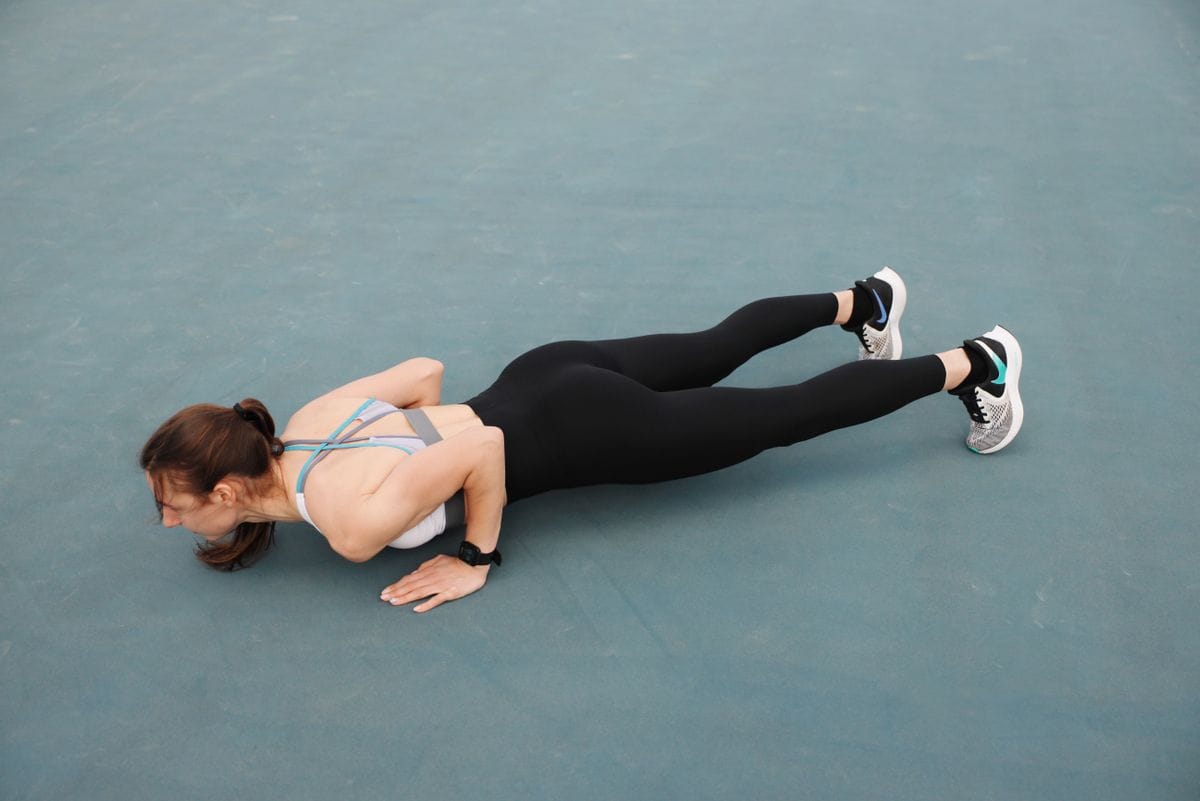
The ytwl exercise moves through four letters, each one a distinct shape with the same finish: squeeze the shoulder blades at the top.
- Letter 1: The Y. Lie face down, arms extended overhead at roughly 30–45 degrees out from your body, thumbs pointing up. Squeeze the shoulder blades down and back, lift both arms off the floor, pause, and lower with control.
- Letter 2: The T. Slide the arms straight out to the sides, thumbs still up. Lift by pinching the shoulder blades toward the spine — the arms rise because the blades squeeze, not the other way around.
- Letter 3: The W. Bend the elbows so the arms frame your head like a W. Lift, squeezing the blades together and down, elbows and hands rising as one piece.
- Letter 4: The L. Elbows bent 90 degrees and level with the shoulders, forearms hanging toward the floor. Lift the elbows, then rotate the forearms up until the thumbs point to the ceiling — the rotation is the rep. Flow through Y, T, W, L in sequence, breathing steadily.
200+ FCS 战斗应用
As the closing scapular stability drill of Block B (Somatosensory Reset & Antagonist Recovery), the prone Y-T-W-L raises exist to pay back a debt: combat training is push-dominant, and every session leaves the rear shoulder a little weaker than the front.
Each punch you throw is decelerated by the posterior shoulder and rotator cuff — the same small muscles these four letters strengthen. A 打空拳训练 writes checks that the scapular retractors must cash, round after round.
That is why this drill sits in the cool-down, directly opposite pushing patterns like the hindu push-up: the antagonist recovery slot. Balanced shoulders punch longer, decelerate harder, and stay out of the injury room.
How to Structure Your YTWL Exercise
A complete Y-T-W-L block at Gooart Space follows the 200+ FCS cool-down structure: 2 rounds of 5–8 reps per letter, with a 2-second squeeze at the top of every rep and 30 seconds of rest between rounds.
Round 1 moves through all four letters at a deliberate tempo — lift on two counts, squeeze for two, lower on two. Round 2 repeats the sequence, or upgrades to isometric holds: 10 seconds at the top of each letter for athletes who complete round 1 cleanly.
Keep every rep in a pain-free range and finish the session with loose arm circles. This is recovery work — the goal is a precise squeeze, never a grind.
Common Mistakes in This YTWL Shoulder Exercise
- Shrugging the shoulders toward the ears. The upper traps hijack the lift and the lower blades never work. 修正方法: Pull the shoulder blades down and back first, then lift — think “pockets, not ears.”
- Lifting with lower-back arch. Heaving the chest turns a shoulder drill into a back extension. 修正方法: Keep the ribs and hips glued to the mat; only the arms rise.
- Thumbs rotating down. Palms-down lifts jam the shoulder in a pinched position. 修正方法: Keep the thumbs pointing up (Y, T, W) and finish the L with thumbs to the ceiling.
- Skipping the top squeeze. Fast, floaty reps skip the entire point of the drill. 修正方法: Pause two full seconds at the top of every rep — imagine pinching a pencil between your shoulder blades.
- Craning the head up. Looking forward strains the neck and breaks the spine line. 修正方法: Keep the forehead down and the neck neutral — rest it on a folded towel if needed.
- Forcing height through pain. Chasing range with a cranky shoulder feeds the exact irritation this drill treats. 修正方法: Lift only through the pain-free range — a small, clean squeeze beats a high, ugly one.
安全注意事项
- Use a mat and support the neck: A folded towel under the forehead keeps the neck relaxed and the breathing easy.
- Stay in a pain-free range: This is rehab-grade work — any letter that pinches gets a smaller range or a temporary skip.
- Squeeze, don’t swing: Slow, controlled lifts protect the rotator cuff; momentum defeats the purpose entirely.
- Keep it light: Bodyweight is the standard here — add small weights only after every letter is clean with a full 2-second squeeze.
- 停止信号: Sharp shoulder pain, pinching at the top of a lift, or numbness and tingling down the arm mean stop the letter, shake out the arms, and shorten the range — recovery work should never leave you sorer than the training it repairs.
教练提示: “Lie face down. Raise your arms sequentially into Y, T, W, and L shapes, squeezing your shoulder blades at the top.”
益处
作为涵盖200多个FCS动作的更广泛动作库的一部分,该动作以核心训练为基础 力量训练 原理上,同时专门针对力量与体能阶段的需求而设计。从难度上看,新手可以放心从这个动作开始,因为它的动作模式很容易上手。
从后勤角度来看,无需搭档,可完全独自训练;在器材方面,只需要最少量、可随身携带的装备。
正是这种低后勤门槛与清晰技术标准的结合,让这项训练在 Gooart Space 的 200+ FCS 体系中占有一席之地,而不仅仅是一个新鲜感动作:它可以被持续训练、长期追踪,并随着你整体格斗体能的提升而安全地逐步进阶。
训练计划与进阶
In the 200+ FCS framework, Prone Y-T-W-L Raises is programmed inside the cool-down and recovery phase of a session. Use it at the end of the session to bring intensity back down, reinforce quality movement patterns, and support recovery for the next training day.
处于新手阶段时,请优先保证动作规范,而不是盲目追求速度、重量或活动范围——前面的动作标准存在的意义,正是为了让你不会为了强度而牺牲质量。
随着你的进步,自然的下一步是增加训练量(额外的组数、回合数或次数)、阻力或速度,或者动作本身的复杂度,但前提是每个动作都能达到本页前面描述的标准。定期回顾“常见错误”与“安全注意事项”部分,因为疲劳往往是技术标准最先崩塌的诱因。
常见问题
Is Prone Y-T-W-L Raises suitable for beginners?
Prone Y-T-W-L Raises is classified as beginner in the 200+ FCS system. In practice, beginners can start here with confidence, since the movement pattern is straightforward to learn, and it is best coached with strict attention to the execution standards above before adding speed, load, or resistance.
What equipment do I need for Prone Y-T-W-L Raises?
这项训练只需最少量、可随身携带的装备,无需搭档,可完全独自训练。本页列出的“装备清单与设置”栏目,列明了 Gooart Space 实际使用的具体装备。
Where does Prone Y-T-W-L Raises fit in a training session?
Prone Y-T-W-L Raises belongs to the cool-down and recovery phase of the 200+ FCS session structure. Use it at the end of the session to bring intensity back down, reinforce quality movement patterns, and support recovery for the next training day.
Scapular Stability Drill
If your goal is “scapular stability drill”, this Prone Y-T-W-L Raises breakdown gives you the technique cues and programming context you need.
相关练习
您已经阅读了相关标准——现在就来培训他们吧。预约我们在马六甲工作室的一对一课程,在第一小时内即可针对您所使用的全部7个FCS系统完成基准评估。.
预约您的首次课程