

Walking Lunge is a beginner strength and conditioning drill inside the 200+ Functional Combat System (FCS), working primarily the lower stabilizer and posterior chain — quadriceps, glutes, and hamstrings. It is programmed as a main-workout element, trained solo. Equipment needed: nothing but your bodyweight and a few meters of floor.
The walking lunge turns a single-leg strength pattern into forward motion. Each rep forces you to balance, absorb, and drive — one leg at a time, with nowhere to hide. No rack, no bench, no dumbbells required: strip the movement down to bodyweight first and earn every variation that comes after.
Table of Contents
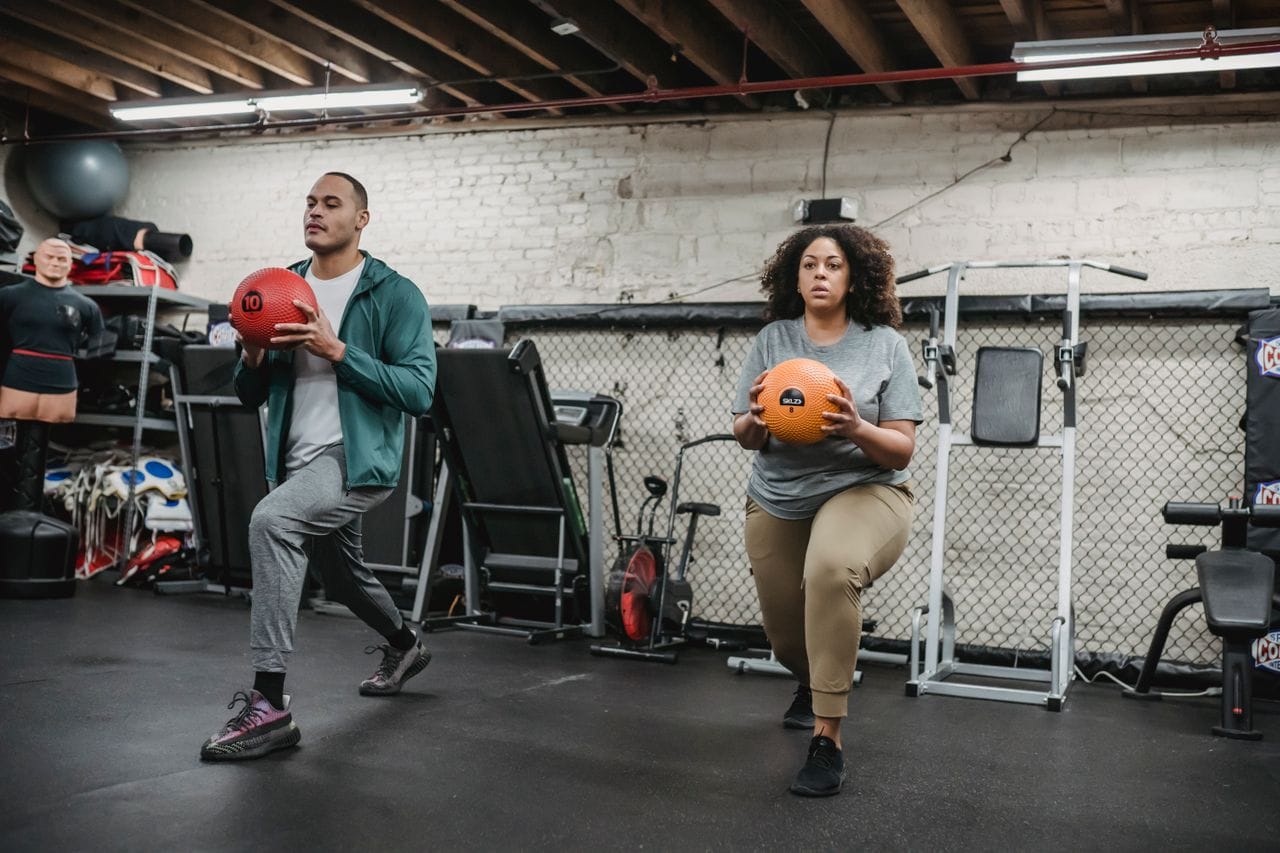
Walking Lunge Execution Standards
- Stand tall, feet hip-width apart, core braced, eyes forward.
- Take a long step forward — long enough that both knees can bend to roughly 90 degrees.
- Lower straight down until your back knee hovers an inch above the floor. Do not let it slam.
- Keep your front knee stacked over the ankle and tracking in line with the toes, torso tall throughout.
- Drive through the front heel to lift your body, then bring the back foot straight through into the next step — no pausing with feet together between reps.
- Alternate legs in a smooth, controlled walk. Every step is a rep; every rep hits the same depth.
200+ FCS Combat Application
In the 200+ FCS roadmap, Walking Lunge belongs to Phase 1.1 (Strength & Conditioning) as the foundational locomotive single-leg builder. Combat sports are played one leg at a time: penetrating steps on takedowns, closing distance behind a jab, recovering from a checked kick, driving an opponent backward off the ropes. The walking lunge trains exactly that — force production from a split stance while traveling forward — plus the hip and ankle stability that keeps those movements safe deep into a round.
How to Structure Your Walking Lunge Training
Program Walking Lunge in the main block of your session, after the warm-up: 3–4 sets of 10–20 steps (5–10 per leg), resting 90 seconds to two minutes between sets. If balance wobbles early on, hold a wall or rack lightly for the first sessions, then wean off — the stability demand is part of the training effect. At beginner level, step length and knee position beat speed every time; the walk should look calm, not rushed.
Common Mistakes
- Short, choppy steps. A short step forces the front knee past the toes and loads the joint instead of the muscle. Step long enough that the front shin stays near vertical at the bottom.
- Slamming the back knee. Dropping the rear knee into the floor on every rep is a bruise factory and a sign of lost control. Lower to a hover, touch softly at most.
- Leaning the torso forward. Pitching the chest over the front knee steals glute work and stresses the lower back. Stay tall; the hips drop straight down.
- Pushing off the back foot. Lunging forward by shoving with the trailing leg turns the rep into a stumble. Drive through the front heel — the front leg does the work.
Safety Notes
- Use a flat, grippy surface with a clear lane of at least five meters — no obstacles mid-set.
- Control the descent on every rep; the knee should meet the floor’s neighborhood, not collide with it.
- If balance goes, step out of the rep and reset — never fight to save a wobbling rep under fatigue.
- Stop the set if sharp knee, hip, or ankle pain appears — technical quality is the safety system.
Coaching cue: “Step long, drop straight down, back knee hovers. Drive through the front heel and flow into the next step — tall, quiet, controlled.”
Benefits
As part of the broader 200+ FCS exercise library, this movement is the bodyweight foundation of the lunge family, built on core strength training principles while targeting the specific demands of the Strength & Conditioning phase. It trains the quadriceps, glutes, and hamstrings one leg at a time, irons out left-right imbalances, and builds the ankle, knee, and hip stability that bilateral squats cannot fully reach.
From a logistics standpoint, no equipment and no training partner are required, so it can be trained entirely alone — a hotel room, a corridor, or a patch of gym floor is the whole setup.
That combination of low logistical overhead and clear technical standards is exactly why this drill earns a permanent spot in the Gooart Space 200+ FCS system rather than being a one-off novelty movement: it can be trained consistently, tracked over time, and progressed safely as your overall combat fitness improves.
Programming & Progression
In the 200+ FCS framework, Walking Lunge is programmed inside the main workout block of a session. Program it in the main block, after the warm-up, when you have the most physical and mental capacity to hold strict technical standards under fatigue.
At the beginner level, prioritize clean technique over speed, load, or range of motion — the execution standards above exist precisely so that quality is never sacrificed for intensity.
As you progress, the natural next step is to increase either the volume (extra sets or steps), add load with dumbbells at your sides, or slow the tempo, but only once every rep can be performed to the standard described earlier on this page. Revisit the Common Mistakes and Safety Notes sections regularly, since fatigue is usually what causes technical standards to break down first.
Frequently Asked Questions
Is Walking Lunge suitable for beginners?
Walking Lunge is classified as beginner in the 200+ FCS system. It is bodyweight-only and self-limiting — if balance is not there yet, hold a support lightly for the first sessions and shorten the range. The pattern scales to any level by adjusting step count and load.
What equipment do I need for Walking Lunge?
Nothing beyond your bodyweight and a few meters of flat floor. No partner, no rack, no bench. Check the Equipment Kit and Setup fields listed on this page for the exact setup used at Gooart Space.
Where does Walking Lunge fit in a training session?
Walking Lunge belongs to the main workout block of the 200+ FCS session structure. Program it as a primary single-leg strength movement, or pair it with an upper-body press or pull for a simple full-body session.
Walking Lunges Muscles Worked
Looking for walking lunges muscles worked? The front leg does most of the driving: quadriceps and glutes carry the load, with hamstrings assisting the hip extension. The trailing leg’s hip flexors get a loaded stretch each step, while the calves, adductors, and the small stabilizers around the ankle and knee work constantly to keep the path straight — which is why walking lunges feel harder than the same reps done in place.
Related Exercises
You've read the standards — now train them. Book a 1-on-1 session at our Melaka studio and get your baseline mapped across all 7 FCS systems in your first hour.
Book Your First Session