
An abs home workout does not need a crunch machine, a branded mat, or a 30-day challenge PDF. Your abdominal muscles respond to the same things every other muscle responds to: progressive tension, enough quality reps, and consistency. This guide gives you the coach’s version — the five movements that matter, a 15-minute circuit, and the truth about belly fat that the challenge PDFs conveniently skip.
Table of Contents
What Your Abs Actually Do
Your core is not one muscle and not one job. The rectus abdominis flexes the spine, the obliques rotate and resist rotation, and the deep transverse abdominis braces everything like a weight belt you were born with. In training and in fighting, the core’s real job is transfer: force from the legs has to cross the trunk before it reaches a punch, a kick, or a heavy bag of groceries. Train it to brace and transfer, not just to crunch.
The Best Abs Home Workout Exercises
Five movements cover every job the core does. No equipment, no floor space beyond a yoga mat:
- Dead Bug — the foundation brace: trunk still while limbs move. Full execution notes live in the dead bug exercise page.
- Front Plank — the anti-extension hold. Quality over minutes: ribs down, glutes on, breathe behind the brace.
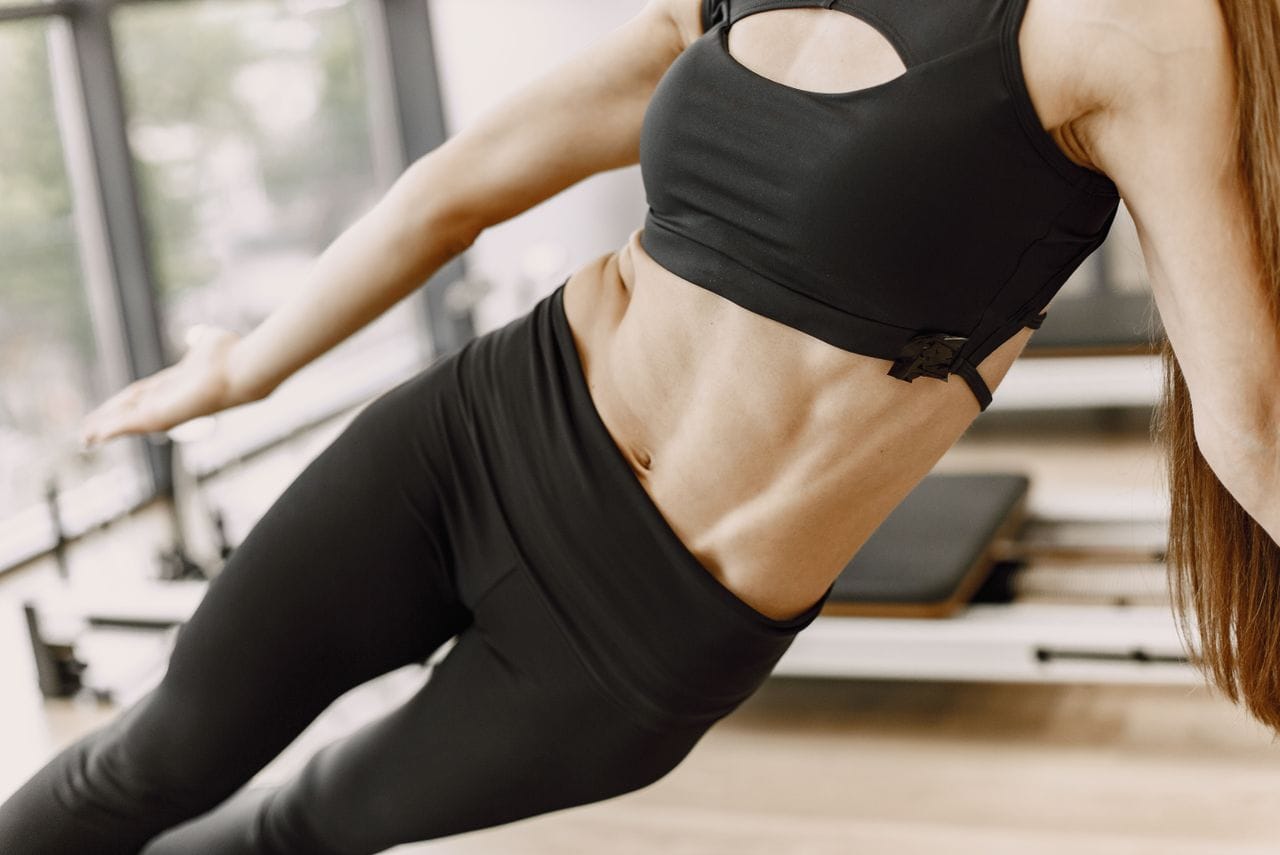
- Side Plank — the anti-lateral-flexion hold most people skip, and the one obliques care about most.
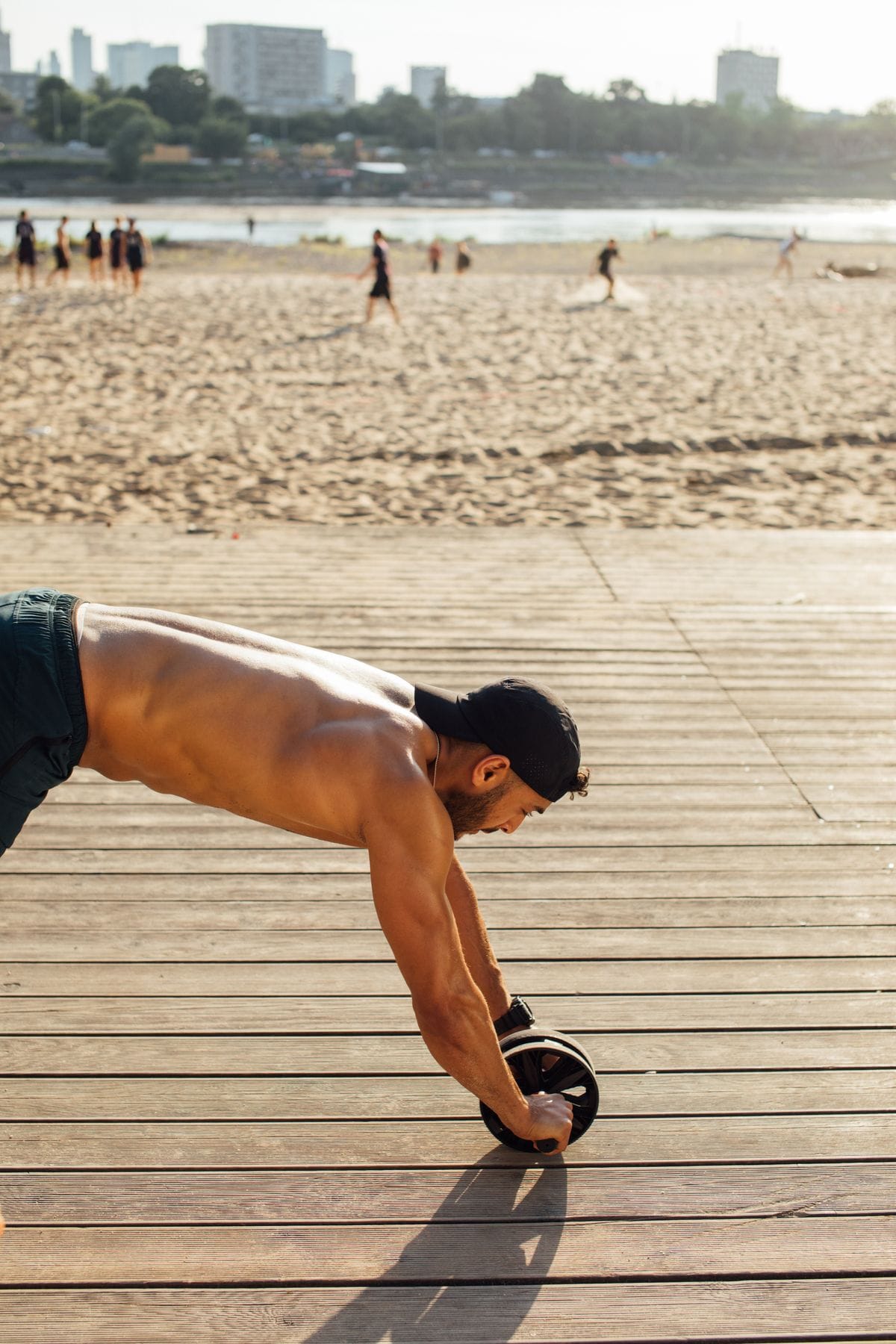
- Mountain Climbers — the brace under motion: hips level while the legs run.
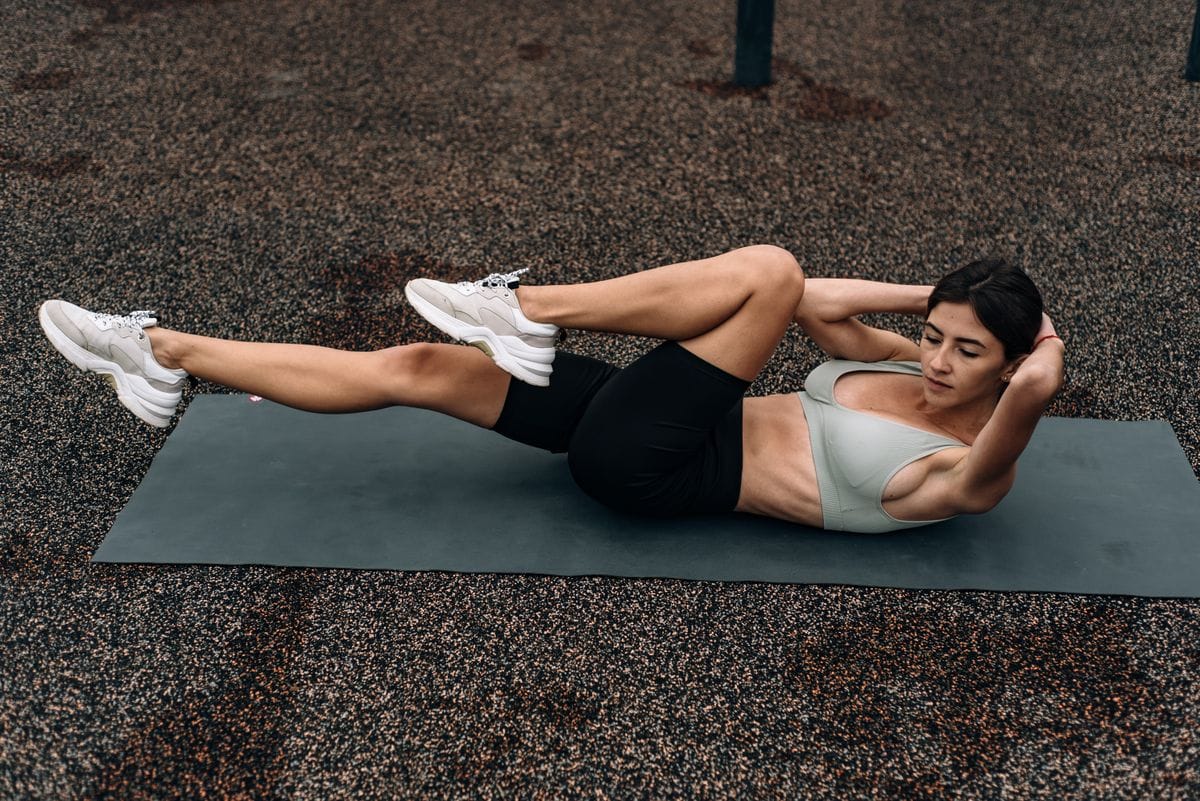
- Reverse Crunch — controlled lower-ab curl, no neck pulling, no momentum.
The 15-Minute Circuit
Three rounds, 40 seconds work per station, 20 seconds to move and reset, 90 seconds between rounds:
- Dead Bug → Front Plank → Side Plank (20 s per side) → Mountain Climbers → Reverse Crunch
That is the full abs home workout: 15 minutes including rest, two to four times per week. When three clean rounds feel easy for two sessions in a row, progress by slowing the tempo or extending the work interval — not by adding junk reps.
Belly Fat Home Workout: The Honest Truth
No abdominal exercise burns belly fat locally — spot reduction is the most durable myth in fitness. Fat loss is a whole-body energy-balance equation; core training builds the muscle underneath, and the muscle shows when total body fat drops. The honest split: train the core for strength and transfer, fix the plate for visibility. What and when you eat drives the fat side of the equation — the pre workout meal guide covers the fueling basics without the usual marketing.
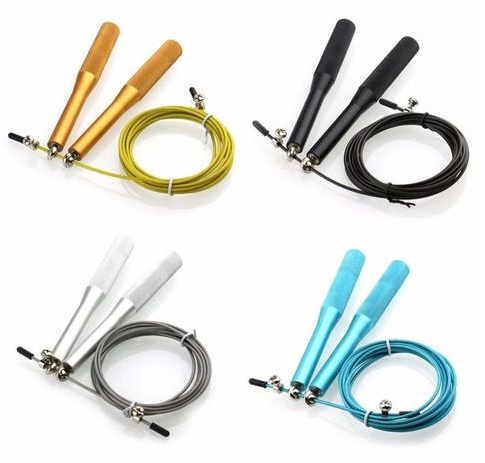
Best Speed Jump Rope – Aluminum Skipping Rope (3M Cable)
Crunches alone will not burn abdominal fat — high-intensity full-body cardio creates the caloric deficit that reveals a visible six-pack. Jumping rope burns up to 20 calories per minute while forcing the entire anterior core to brace on every landing. Built with dual 360° ball bearings and lightweight aluminum handles.
Common Mistakes
- Crunching by the hundred. Volume without tension is just neck cardio. Slow reps with a hard brace beat fast reps with a loose one.
- Pulling the neck. Hands support the head; they do not tow it.
- Training abs every day. Muscle is built between sessions. Two to four days per week is plenty.
- Ignoring the brace. If your lower back arches off the floor, the rep stopped being an ab rep.
FAQ
How often should I do an abs home workout?
Two to four sessions per week. The core recovers fast, but it still recovers — daily maximal ab work buys soreness, not faster results.
Can a home workout give me a six-pack?
It can build the muscle. Whether you see it depends on body fat, which is decided mostly in the kitchen. Both matter; neither replaces the other.
Are planks better than crunches?
For most people, yes — planks train the brace your spine actually uses. Crunches train one range of one muscle. Do both if you like; skip neither for the other if you have to choose.
Do I need any equipment?
No. A floor and something soft for your back is the whole setup. A pull-up bar adds hanging leg raises later, which are worth it.
How long until I see results?
Strength and control change in two to four weeks. Visible change depends on starting body fat — expect months, not days, and judge by photos, not the mirror.
Strong Core First, Everything Follows
Fifteen honest minutes, three times this week — that is the entire ask of this abs home workout. Build the brace here, then take it somewhere bigger: the functional training workout blueprint turns core strength into full-body strength, and the free My Training library is where the whole system lives.
You've read the standards — now train them. Book a 1-on-1 session at our Melaka studio and get your baseline mapped across all 7 FCS systems in your first hour.
Book Your First Session