
Table of Contents
What Actually Works for Performance & Recovery
Stop Wasting Money on Supplements
Searching for the best supplements for MMA fighters usually ends the same way: stacking random products, chasing marketing claims, and ignoring the fundamentals that actually drive performance.
Most fighters are doing it wrong.
Here’s the truth:
Supplements don’t build fighters. Systems do.
This guide gives you a clear, evidence-based system for choosing supplements for fighters — built on the same framework used in NASM sports nutrition education and ISSN position stands — to decide:
- What to take
- When and how much to take
- What to ignore
The Fighter Nutrition Hierarchy (Most Important First)
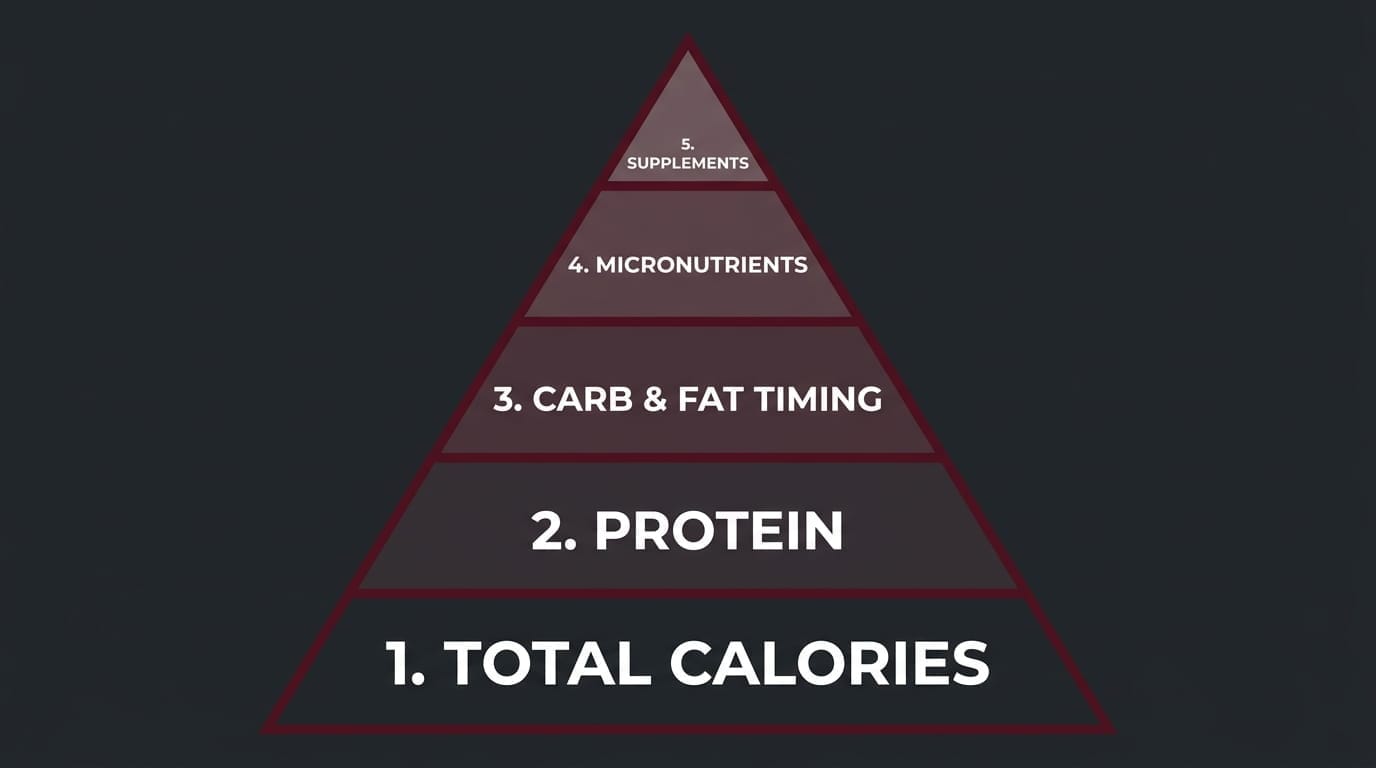
Think of nutrition like a pyramid. Supplements are the small block at the top — they only work when everything below them is already in place.
Level 1 — Total Calories
If your energy intake is wrong, nothing else works.
- Too low → fatigue, poor recovery, lost muscle
- Too high → unnecessary weight gain
Level 2 — Protein Intake
Your #1 performance nutrient.
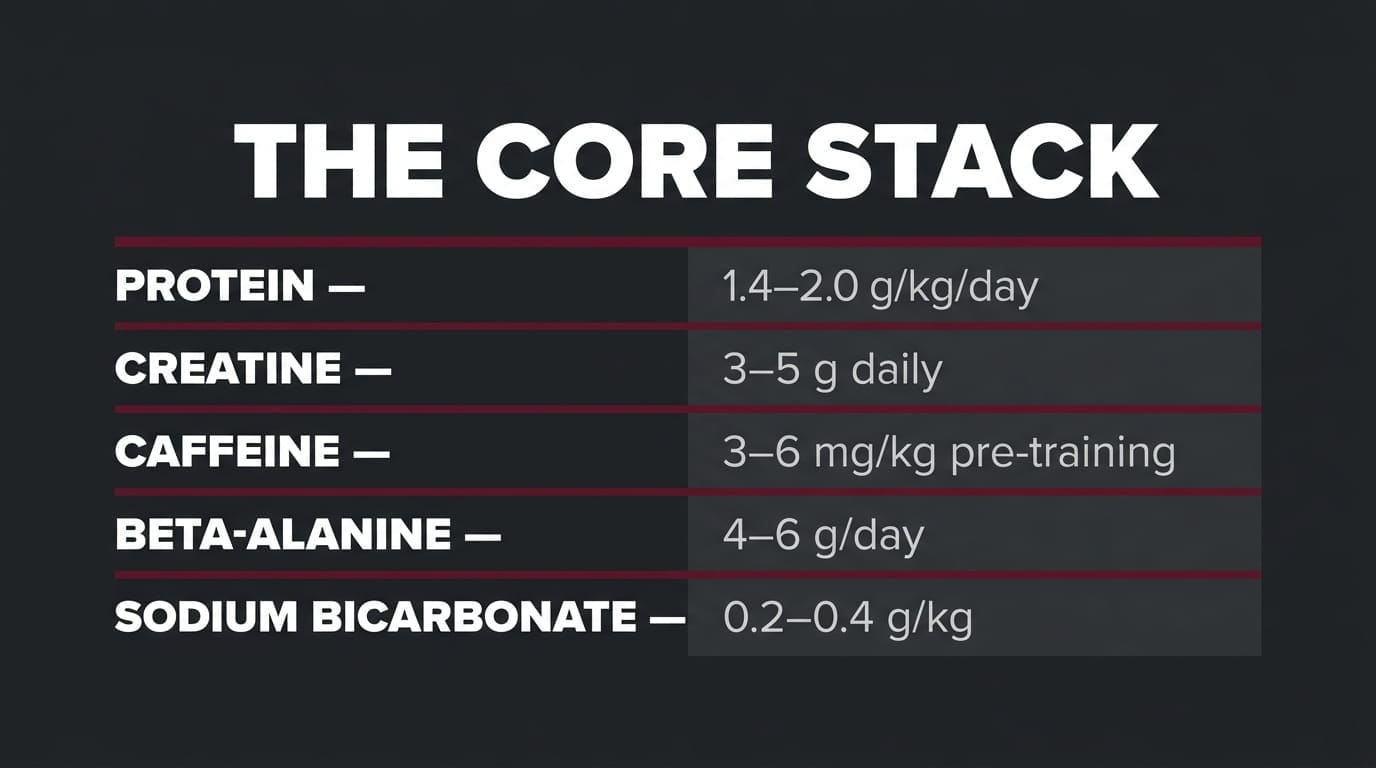
- Training fighters: 1.4–2.0 g/kg bodyweight per day (ISSN position stand: protein)
- Cutting phase: 2.2–3.0 g/kg to preserve lean mass in a deficit
- Split it: 0.4–0.55 g/kg per meal, at least 4 meals — your body uses protein better in doses than in one giant dinner
- Bonus: 30–40g of casein 30–60 min before sleep supports overnight muscle repair
Level 3 — Carb & Fat Timing
Carbs fuel high-intensity rounds; fats support hormones and long-term health. Time carbs around training sessions to support intensity and recovery.
Level 4 — Micronutrients
Deficiencies are hidden performance killers:
- Magnesium → recovery & sleep
- Iron → endurance
- Vitamin D → strength & immunity
Fix these with vegetables, fruit and whole foods first.
Level 5 — Supplements
Only now do supplements enter the picture — and the list of the best supplements for MMA fighters is much shorter than the industry wants you to believe.
How to Judge Any Supplement in 10 Seconds
Evidence has a ranking, from strongest to weakest:
Meta-analyses › randomized controlled trials › observational studies › single studies › animal studies › ads & testimonials.
If a product’s only “proof” is an influencer transformation or aggressive marketing copy, that’s the weakest evidence there is. If it sounds aggressive in marketing, it’s usually weak in science.
The Core Stack (Strong Evidence Only)
Only a handful of supplements have consistent, high-level evidence. Here they are.
1. Protein (Foundation Layer)
Why it matters
- Triggers muscle protein synthesis
- Supports strength, recovery, and body composition — especially during weight cuts
Practical use
- Fill gaps when whole food isn’t enough
- Post-training or between meals
- Whey and casein are leucine-rich; plant proteins (soy, pea) work too — aim for the top of your daily range if you’re fully plant-based
Reality check
If your daily protein is already optimized → protein supplements are optional. It’s food in a scoop, not magic.
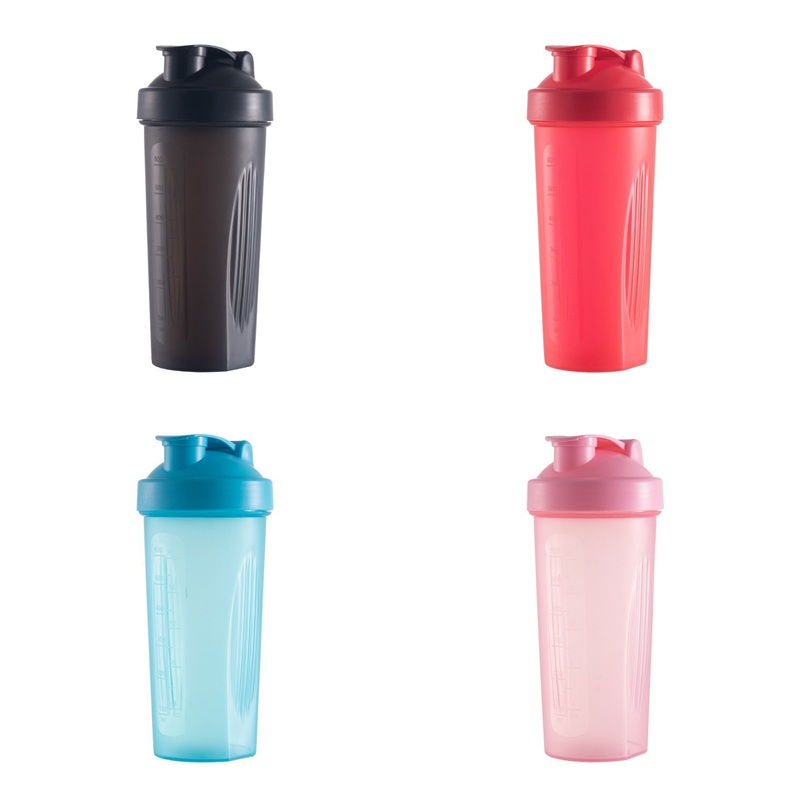
600ml Protein Shaker Bottle (With Powder & Pill Storage)
Hitting two-a-day sparring and strength sessions? Keep your whey and electrolyte powders cleanly separated with dual screw-on compartments, ready for instant hydration and post-round recovery anywhere.
2. Creatine Monohydrate (Performance Driver)
If you only add one thing, make it this — the evidence behind creatine for MMA is the strongest in all of sports nutrition.
What it does
- Increases strength and power output
- Improves repeated high-intensity performance — exactly what fight rounds demand
- Backed by 1000+ studies; the single best-supported supplement in sports nutrition (ISSN position stand: creatine)
Dosage
- 3–5g daily, every day — timing doesn’t matter, consistency does
- Optional fast-load: 20–25g/day (split doses) for 5–7 days, then 3–5g/day
- Stick to monohydrate — HCl, buffered and “advanced” forms have no proven advantage
Fighter’s note
Creatine pulls water into muscle. That’s normal — but factor the 1–2kg of water weight into your weight-cut planning.
3. Caffeine (The Legal Edge)
What it does
- Improves alertness, strength output and endurance
- Lowers perceived effort — hard rounds feel more manageable
Dosage
- 3–6 mg/kg, about 60 minutes before training (that’s 210–420mg for a 70kg fighter) — see the ISSN position stand: caffeine
- Stay under 400–500mg/day total
- More is not better: above ~9 mg/kg there’s no extra benefit, only side effects
Myths & cautions
- Standard doses do not dehydrate you — drink water normally
- Respect your sleep: late-evening sessions and high caffeine don’t mix
- Avoid or consult a doctor if you have heart conditions, high blood pressure, anxiety, or are pregnant
4. Beta-Alanine (Round Survivor)
The case for beta alanine for fighters comes down to one thing: surviving the rounds.
What it does
- Raises muscle carnosine, buffering the acid burn in efforts lasting 30 seconds to 10 minutes — the exact profile of a fight round
Dosage
- 4–6g/day in split doses, loaded over 2–4 weeks (it works by saturation, not acutely) — per the ISSN position stand: Beta-Alanine
Side note
The skin tingling (paresthesia) is harmless; splitting doses reduces it.
5. Sodium Bicarbonate (Situational Buffer)
What it does
- Buffers blood acidity during short, repeated high-intensity efforts — confirmed in a 2025 network meta-analysis of elite combat athletes
Dosage
- 0.2–0.4 g/kg, 60–150 minutes before hard sessions
Warning
GI upset is common. Always test it in training first — never try it for the first time before a competition.
Situational Tools (Useful in the Right Context)
- Electrolytes — during long or high-sweat sessions, weight cuts, and hot-climate training. Sip steadily; don’t chug.
- EAAs (Essential Amino Acids) — 6–15g with 1.7–3.5g leucine. Most useful during aggressive cuts or when whole-food protein is hard to get in.
- Omega-3 — moderate evidence for recovery and joint support. Not mandatory, but reasonable ROI for high-volume training.
- High-protein meal replacements — one of the few evidence-backed weight-management tools: portion control + protein + convenience.
What NOT to Waste Money On
Let’s be direct: most products marketed as the best supplements for MMA fighters don’t survive the evidence check. These are low ROI, weak evidence, or worse:
- BCAAs — redundant if your daily protein is sufficient (protein already contains them)
- “Fat burners” — most ingredients show small, inconsistent effects at best; the category runs on marketing, not meta-analyses
- Carb & fat blockers — small and inconsistent results
- “Test boosters” & prohormones — weak evidence, real health risks, and a genuine risk of failing a drug test
- Random pre-workout blends — under-dosed “proprietary blends” of the above. If you want the proven effect, take caffeine at a known dose instead
Safety First: The Label Isn’t Always the Truth
Here’s what most fighters don’t know: in most countries, supplements are regulated like food, not medicine. No one tests them for effectiveness — or even accuracy — before they hit the shelf.
Protect yourself:
- Look for third-party testing — NSF Certified for Sport, Informed Choice, BSCG, USP or ConsumerLab seals verify what’s actually in the bottle
- Competing athletes: contaminated supplements have caused failed drug tests and bans. Third-party certification is non-negotiable
- In Malaysia: registered health products carry a MAL registration number (NPRA) — check it
- On medication, pregnant, or managing a health condition? Talk to your doctor or pharmacist first
Third-party testing verifies contents and purity — it does not prove the product works. Evidence does that.
Example: Fighter Setup (70kg Athlete)
Here’s how the best supplements for MMA fighters come together in a real, simple plan.
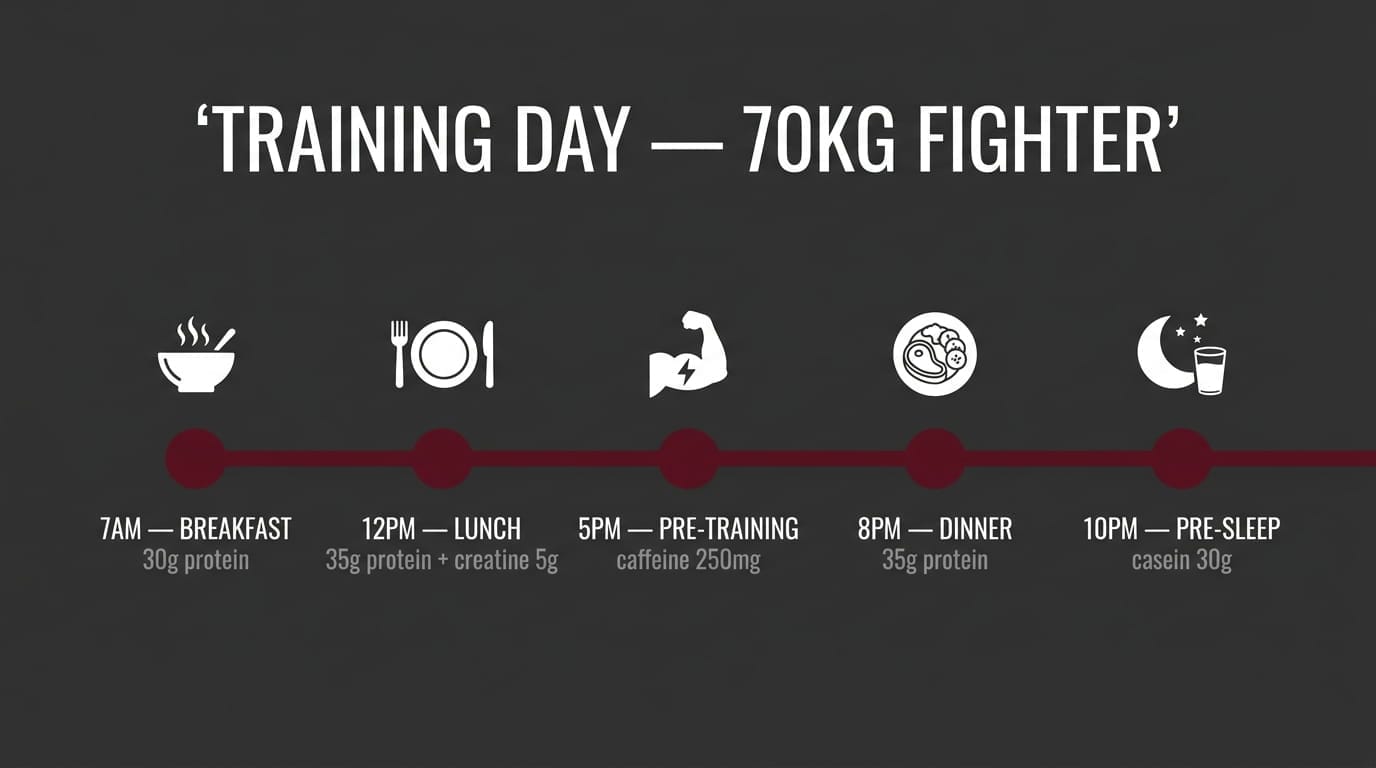
Goal: Performance + Lean Muscle
- Protein: 112–140g/day, split into 4–5 meals of ~28–38g
- Creatine: 3–5g daily, any time
- Caffeine: 210–420mg, ~60 min before hard sessions (skip late-night doses)
- Electrolytes: during long or high-sweat sessions
Goal: Cutting for a Fight
- Protein rises to 154–210g/day (2.2–3.0 g/kg) to protect muscle
- Keep creatine, but plan for its water weight in your cut
- High-protein meal replacements can help control calories
That’s it. No complicated stack. No wasted spend.
The Real Competitive Advantage
Most fighters are distracted by supplements.
Serious athletes focus on:
- Consistency
- Training quality
- Sleep and recovery systems
Even the best supplements for MMA fighters are leverage tools, not the foundation.
FAQ: Best Supplements for MMA Fighters
What are the best supplements for MMA fighters?
Five earn their place on evidence: protein (to hit your daily target), creatine monohydrate (3–5g daily), caffeine (3–6mg/kg before training), beta-alanine (4–6g/day loaded over 2–4 weeks), and sodium bicarbonate for specific hard sessions. Everything else is situational at best.
Do fighters actually need supplements?
No. Supplements for fighters only matter once calories, protein, carb timing and micronutrients are already handled. A fighter who eats well can train and compete at a high level with none of them — they’re the last 5%, not the foundation.
Is creatine worth it for MMA?
Yes — creatine for MMA is the closest thing to a sure bet in sports nutrition: more power, better repeated high-intensity output between rounds, and one of the strongest safety records of any supplement. Take 3–5g daily and give it 3–4 weeks. If you cut weight, plan for roughly 1–2kg of extra water weight.
How long does beta-alanine take to work?
Beta alanine for fighters works by saturation, not instantly: expect 2–4 weeks of consistent 4–6g/day in split doses before the later rounds start feeling different. The skin tingling is harmless.
Are supplements safe to buy in Malaysia?
Check two things before buying: a MAL registration number (NPRA) on the label, and — if you compete — a third-party certification like NSF Certified for Sport. If a product has neither and promises dramatic results, walk away.
Want a Personalized Fighter Plan?
Don’t guess your numbers — calculate them:
- Protein Calculator (free): your daily protein target and per-meal split, based on your weight and goal
- Daily Fuel (member account): personal hydration goal, one-tap logging for water, meals, supplements and training, plus weekly insights
👉 Start with the Protein Calculator, then track it in Daily Fuel.
This article is educational content, not medical advice. It does not diagnose, treat or prevent any condition. Consult a healthcare professional before starting any supplement, especially if you take medication or have a health condition.
You've read the standards — now train them. Book a 1-on-1 session at our Melaka studio and get your baseline mapped across all 7 FCS systems in your first hour.
Book Your First Session