

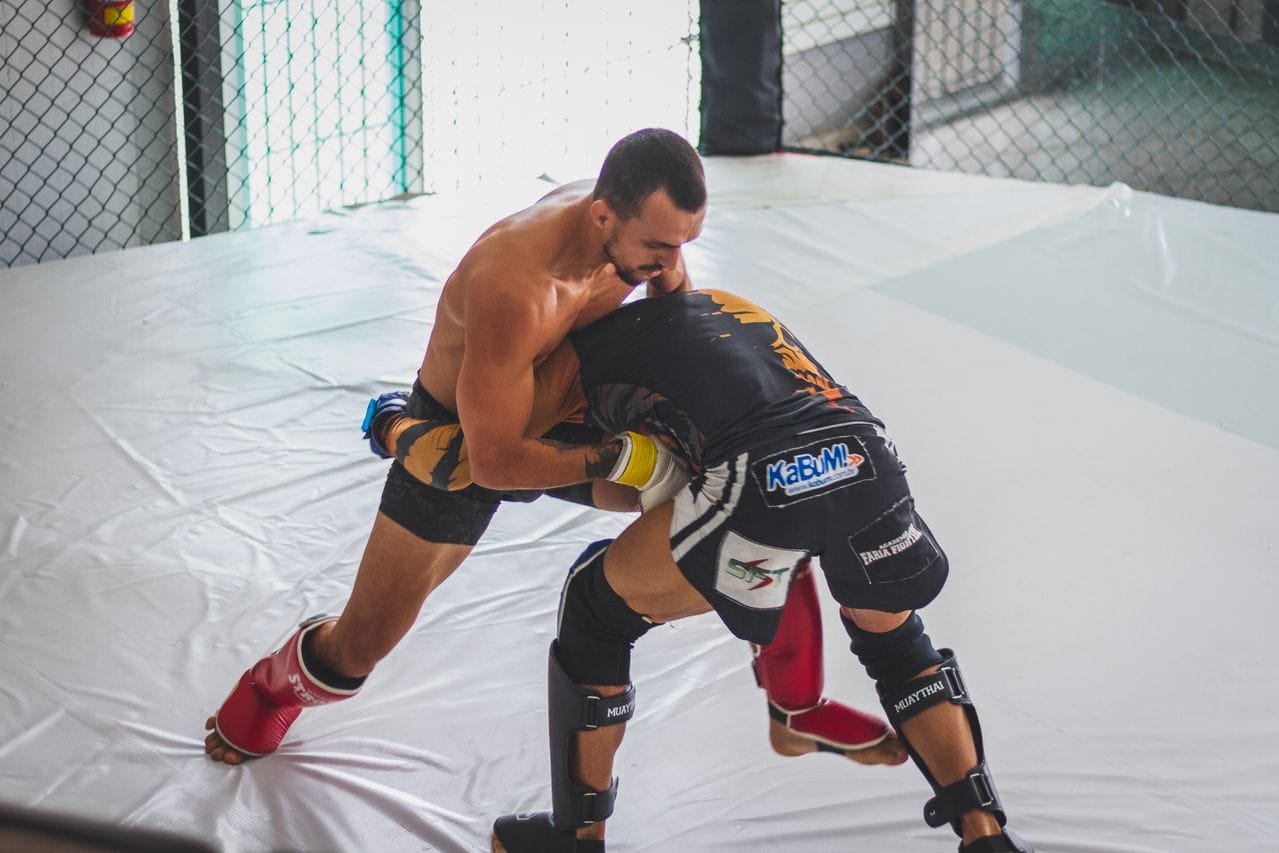
An mma workout for beginners does not start with sparring, and it definitely does not start with buying gear. It starts with the three things every fighter’s week is built on: bodyweight strength through fundamental patterns, movement skills, and short hard conditioning. This guide gives you the coach’s version: a weekly structure, the bodyweight circuit, and how each body-part day fits the fight-athlete picture — all in living-room space.
Table of Contents
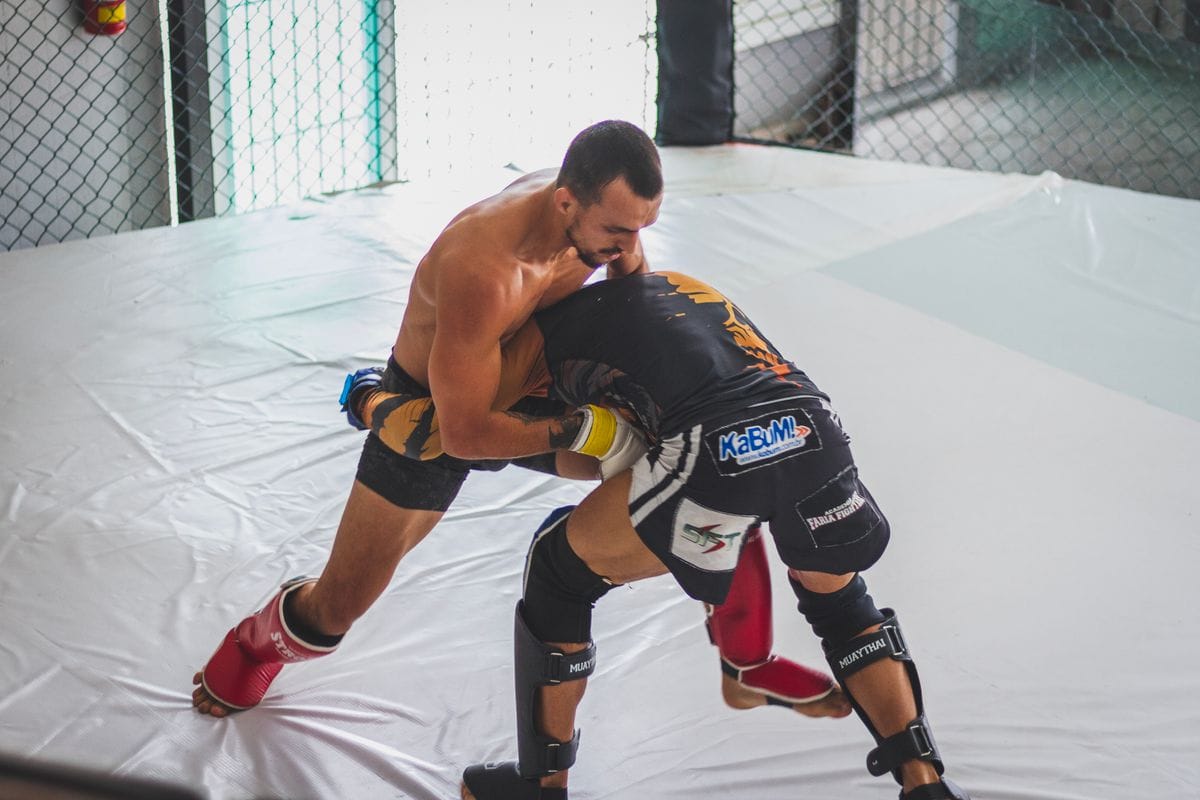
What Beginners Actually Need
Mixed martial arts blends striking, clinch, and grappling — but underneath all three sits the same engine: strong legs, a braced trunk, shoulders that last, and a gas tank. The beginner mistake is chasing techniques before the body that has to deliver them. Build the engine first; the skills pages are free and waiting.
MMA Workout for Beginners: The Weekly Structure
Three sessions per week, each 25–30 minutes, at least one rest day between:
- Day A — Strength circuit (below)
- Day B — Skills shadowing: stance, jab, footwork rounds — the combat stance and jab pages are your coaches
- Day C — Strength circuit plus conditioning finisher
Warm Up First: The Five-Minute Flow
Never train cold. Before every session: 60 seconds of jumping jacks, 30 seconds of arm circles each way, 30 seconds of hip circles, 10 slow squats, 10 inchworms, then 2 easy minutes of shadowboxing. The target is heat and range of motion, not fatigue — finish warm, breathing slightly faster, joints loose. Skip it and the first circuit round becomes the warm-up, which is how knees and shoulders start complaining.
The Bodyweight MMA Workout
One circuit, four movements, three rounds — 40 seconds work, 20 seconds transition, 90 seconds between rounds:
- Squats — the shot, the level change, the base.
- Push-ups — punching endurance is pressing endurance.
- Walking lunges — single-leg strength for movement and kicks.
- Sprawls — the takedown defense that doubles as the finisher.

MMA Conditioning Workout Finisher
After Day C’s circuit: 6 intervals of 30 seconds fast shadowboxing or sprawls, 30 seconds easy pace. This is the fight-shaped gas tank — hard bursts, incomplete recovery, repeat.
Back: Rows Without a Bar
A home workout for back needs one horizontal pull: doorframe rows, towel rows under a sturdy table, or backpack rows. Three sets twice a week keeps the pull in balance with all that pushing.
Shoulders: The Durability Block
A home workout shoulder block is pike push-ups plus slow wall slides — two moves that build pressing strength and the shoulder health striking volume demands. Two sets of each on circuit days.

Boxing Dumbbells – Hand-Held Shadow Boxing Weights
Beginner fighters often drop their hands in later rounds because anterior deltoids burn out. Adding 3 rounds of light 0.5kg–1.0kg hand-held shadowboxing overloads your striking endurance, conditioning your shoulders to keep your defensive guard high under heavy fatigue.
Core: Brace Like a Fighter
A home workout core block is the dead bug plus a side plank — the brace that keeps punches connected to the floor. Every session, five minutes, non-negotiable.
Legs: Squats, Lunges, Sprawls
A home workout leg day for fight fitness is already inside the circuit — squats, lunges, and sprawls cover strength, single-leg work, and explosive hips. Add a fourth round when three feel easy.
The Four-Week Progression
Week 1: three rounds, dropping any station to 30 seconds if 40 feels long. Week 2: full 40-second stations, same three rounds. Week 3: add a fourth round on Day C and extend the finisher to 8 intervals. Week 4: the full structure, plus one extra rep per movement each session — small, boring, relentless. Log rounds and reps after every session. If a week falls apart, repeat it instead of jumping ahead: the plan works because the base gets built, not because the calendar flips.
Three Beginner Mistakes to Skip
- Skipping rest days. Hard days stress the body; the easy days between are when it adapts. Three sessions means four days of walking, stretching, and relaxed shadowing.
- Chasing power before position. A fast punch from a broken stance teaches nothing. Slow reps, clean lines, then speed.
- Adding moves instead of rounds. New exercises dilute practice. Add rounds and pace first; new movements only once the basic four feel automatic.
Recovery: Soreness, Rolling, Sleep
Muscle soreness in the first week or two is normal — delayed-onset soreness is the adaptation signal, not damage. Keep it manageable: five minutes of easy rolling on rest days, an evening walk, and seven-plus hours of sleep. If your legs still feel heavy going into Day C, trade the finisher for an extra easy shadowboxing round and come back fresher. The foam rolling guide covers the full recovery routine.
MMA Training at Home: What You Actually Need
Floor space, a timer, and honest reps. Optional upgrades in order: a pull-up bar, a pair of dumbbells, a heavy bag (the punching bag buying guide covers Malaysian apartments). Skills pages live free in My Training; structure beats equipment every week of the year.
FAQ
Is an MMA workout good for general fitness?
One of the best — it blends strength, mobility, and intervals in a single session. You get fight-athlete conditioning without taking a single punch.
Home workout or gym — which is better for MMA fitness?
For the first months, home is enough and often better: no commute, no waiting, no intimidation. A gym adds coaching, partners, and equipment later — when your base makes those worth paying for.
How long before I am ready for a class?
Eight to twelve weeks of the structure above and you will walk into any fundamentals class ahead of most beginners. In Melaka, the MMA training guide covers the local path.
Do I need to be fit before starting?
No — the circuit scales by work interval. Start at 30 seconds work where 40 is written; the structure does not change, only the dose.
Can I do this every day?
Alternate hard and easy days. The plan is three hard sessions; fill the gaps with walking and easy shadowing, not more circuits.
Build the Engine First
Three sessions this week — circuit, skills, circuit plus finisher. The technique library stays free at My Training, and the engine you build this month is the one every future skill rides on.
You've read the standards — now train them. Book a 1-on-1 session at our Melaka studio and get your baseline mapped across all 7 FCS systems in your first hour.
Book Your First Session