

Wall sit adalah ujian daya tahan kaki paling ringkas yang wujud: belakang melekat pada dinding, kaki ditekuk menjadi kerusi 90 darjah yang sempurna, dan tiada apa yang perlu dilakukan selain bernafas dan bertahan. Latihan wall sit ini membina kekuatan isometrik pada kuadrisep, glute, dan penstabil dalam — tanpa sebarang peralatan selain dinding rata.
Senarai Kandungan
Piawaian Pelaksanaan Wall Sit
Wall sit berkembang melalui empat tahap, daripada mencari dinding sehingga menguasai rasa terbakar itu.
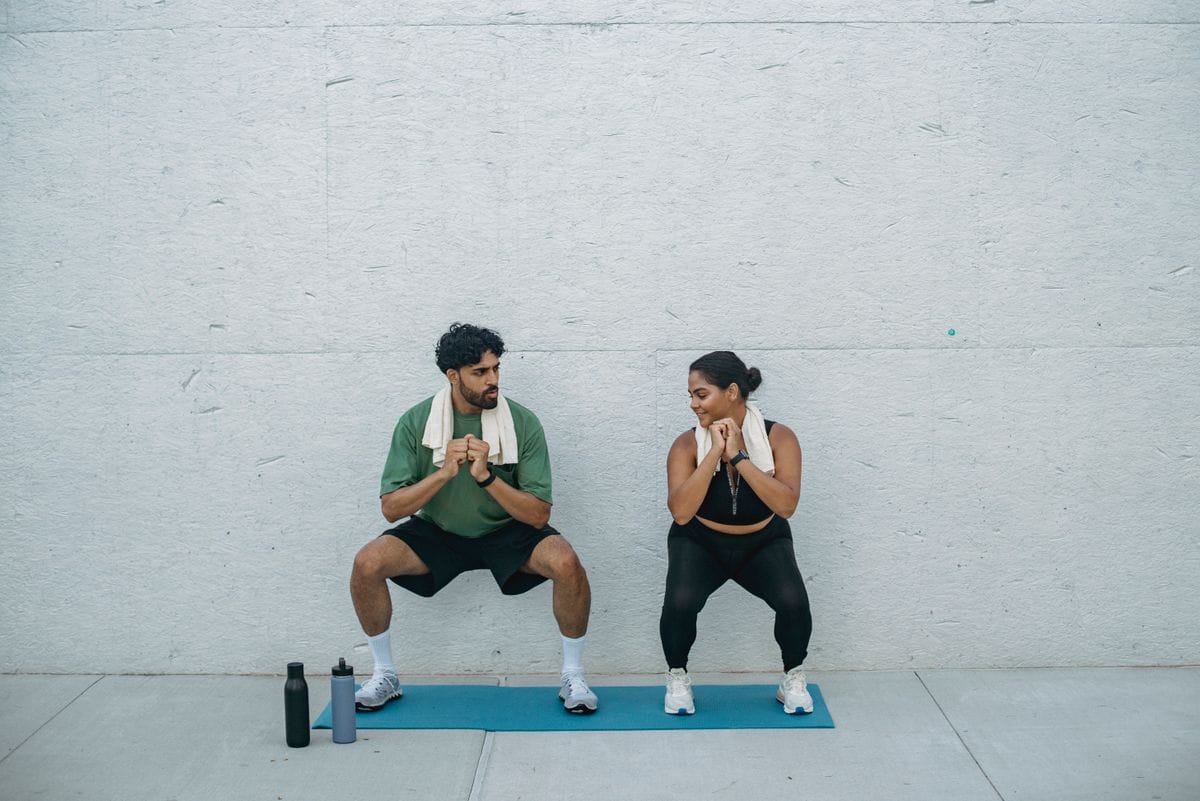
- Tahap 1: Dinding. Berdiri dengan belakang anda bersandar pada dinding rata, kaki selebar bahu. Tekan pinggul, belakang bawah, dan bahu anda ke dinding pada masa yang sama, kemudian langkahkan kaki anda ke hadapan.
- Tahap 2: Kerusi. Gelongsor turun dinding sehingga pinggul dan lutut anda kedua-duanya berada pada tepat 90 darjah — paha selari dengan lantai, tulang kering menegak, lutut bertindih di atas buku lali. Ini adalah kerusi yang sempurna; lebih tinggi adalah regresi, bukan ulangan.
- Tahap 3: Rekatan. Kekalkan keseluruhan belakang melekat pada dinding — tiada jurang di belakang bawah, tiada bahu terkeluar ke hadapan. Hantar berat badan anda melalui tumit dan angkat tangan anda daripada paha: silangkan di dada atau letakkan di pinggul.
- Rentak. Bernafas secara stabil dan lawan rasa terbakar pada kuadrisep anda tanpa beralih, gelisah, atau merangkak ke atas. Tahanan berakhir apabila bentuk pecah — bukan apabila ketidakselesaan bermula.
200+ Aplikasi Pertempuran FCS
Sebagai latihan kaki isometrik teras Blok A (Rintangan Teras Isometrik Berambang Tinggi), wall sit melatih satu kualiti yang tidak boleh dipalsukan oleh mana-mana pejuang: kedudukan yang mengekalkan ketinggiannya walaupun keletihan. Kaki yang tahan pada 90 darjah mengekalkan aras mereka pada pusingan ketiga, ketika pejuang yang letih berdiri tinggi dan terkena balasan.
Tahanan ini juga melatih rantaian posterior dan teras lateral untuk menegang sementara kaki menjerit — permintaan yang sama seperti bertahan dalam clinch atau menahan tendangan tanpa runtuh. Ia adalah kontrak statik di sebalik setiap corak dinamik: apa yang Skuat kossak muatkan dari sisi ke sisi, wall sit menguncikan pada tempatnya.
Kedudukannya dalam slot Menyejukkan Badan / Pemulihan adalah sengaja. Menahan kerusi yang sempurna dengan kaki yang keletihan — sejurus selepas latihan tinju bayangan atau blok kekuatan utama — mengajar sistem saraf untuk mengekalkan struktur ketika segala-galanya ingin runtuh.
Cara Menstrukturkan Wall Sit Anda
Satu blok wall sit yang lengkap di Gooart Space mengikut struktur menyejukkan badan 200+ FCS: 2 hingga 3 tahanan selama 30–45 saat setiap satu, dengan rehat berdiri 30–45 saat antara tahanan.
Tahanan 1 adalah tahanan penentukuran — cari kerusi 90 darjah yang sebenar dan hafal kedudukan tersebut. Tahanan 2 mencapai masa sasaran penuh pada kedalaman yang ketat. Tahanan 3 (pilihan, untuk atlet mahir) dilanjutkan ke arah 60 saat, atau menaikkan cabaran: tangan di belakang kepala, atau lanjutan kaki tunggal perlahan sementara kerusi kekal rata.
Akhiri setiap tahanan mengikut syarat anda: tekan melalui tumit dan gelongsor naik dinding sebelum bentuk pecah. Kerusi yang lebih pendek dan sempurna mengatasi kerusi yang panjang dan merangkak.
Kesilapan Lazim dalam Latihan Wall Sit Ini
- Duduk di atas paras selari. Pinggul lebih tinggi daripada lutut menukar tahanan menjadi sandaran, bukan kerusi. Pembetulan: Gelongsor turun sehingga paha benar-benar selari — tandakan ketinggian pada dinding jika perlu.
- Lutut merentasi melepasi jari kaki. Kaki terlalu dekat dengan dinding membebankan lutut, bukannya kuadrisep. Pembetulan: Langkahkan kaki keluar sehingga tulang kering menegak dan lutut bertindih di atas buku lali.
- Belakang bawah terkeluar daripada dinding. Jurang melengkung membocorkan penegangan yang sepatutnya dibina oleh tahanan ini. Pembetulan: Tekan pinggul, belakang bawah, dan bahu ke dinding sebagai satu unit sebelum gelongsor turun.
- Tangan menekan pada paha. Lengan diam-diam mencuri beban daripada kaki. Pembetulan: Silangkan lengan di dada atau letakkan tangan di pinggul — kaki melakukan semua kerja.
- Berat badan beralih ke jari kaki. Tumit yang terapung mengalihkan tekanan ke lutut dan betis. Pembetulan: Hantar tekanan melalui tumit — anda sepatutnya boleh menggoyangkan jari kaki pada bila-bila masa.
- Menahan nafas. Menahan nafas meningkatkan ketegangan dan menamatkan tahanan lebih awal. Pembetulan: Bernafas mengikut kiraan stabil — tarik nafas untuk tiga kiraan, hembus untuk tiga kiraan — sepanjang tahanan.
Nota Keselamatan
- Pilih permukaan yang kukuh dan tidak licin: Dinding rata dan lantai yang berpegangan mengelakkan kerusi daripada tergelincir — elakkan jubin licin apabila memakai stoking.
- Panaskan badan sebelum tahanan mendalam: Walaupun dalam slot menyejukkan badan, mula dengan tahanan pertama pada sudut yang lebih tinggi sebelum komited kepada 90 darjah.
- Hormati lutut anda: Rasa terbakar sepatutnya berada pada kuadrisep, bukan sendi — kesakitan lutut yang tajam atau terjepit bermakna sudut atau kedudukan kaki adalah salah.
- Sesuaikan tahanan: Jika 90 darjah memecahkan bentuk, tahan pada sudut yang lebih tinggi atau masa yang lebih pendek dan berkembang secara beransur-ansur — kedalaman dahulu, tempoh kedua.
- Syarat untuk berhenti: Kesakitan lutut yang tajam, rasa kebas atau kesemutan pada kaki, belakang bawah yang terkeluar daripada dinding, atau gegaran tidak terkawal yang menganggu kedudukan anda bermakna anda perlu gelongsor naik dan tamatkan tahanan — kualiti kedudukan sentiasa mengatasi saat pada jam.
Petua jurulatih: “Bentuk kerusi sempurna 90 darjah dengan kaki anda. Pastikan belakang anda melekat pada dinding dan lawan rasa terbakar di quads anda.”
Manfaat
Sebagai sebahagian daripada perpustakaan senaman FCS yang lebih luas dengan lebih 200 gerakan, gerakan ini membina ke atas teras latihan kekuatan sambil menyasarkan keperluan khusus fasa Kekuatan & Pengecergasan. Dari segi tahap kesukaran, ini paling sesuai untuk atlet yang sudah mempunyai asas fundamental yang kukuh.
Dari sudut logistik, tiada rakan latihan diperlukan, jadi ia boleh dilatih sepenuhnya bersendirian, dan dari segi peralatan ia langsung tidak memerlukan sebarang alatan, menjadikannya satu gerakan yang benar-benar boleh dilakukan di mana-mana, bila-bila masa.
Gabungan keperluan logistik yang rendah dan piawaian teknikal yang jelas inilah sebabnya latihan ini mendapat tempat kekal dalam sistem 200+ FCS Gooart Space, bukan sekadar pergerakan sekali sahaja: ia boleh dilatih secara konsisten, dijejaki dari semasa ke semasa, dan dimajukan dengan selamat seiring peningkatan kecergasan pertempuran keseluruhan anda.
Pengaturcaraan & Kemajuan
Dalam kerangka kerja FCS 200+, Wall Sit diprogramkan dalam fasa penyejukan dan pemulihan sesi. Gunakan pada penghujung sesi untuk menurunkan intensiti semula, mengukuhkan corak pergerakan berkualiti, dan menyokong pemulihan untuk hari latihan seterusnya.
Pada tahap pertengahan, utamakan teknik yang bersih berbanding kelajuan, beban, atau julat pergerakan — piawaian pelaksanaan di atas wujud khusus supaya kualiti tidak pernah dikorbankan demi intensiti.
Semasa anda semakin maju, langkah seterusnya yang sejadi ialah meningkatkan sama ada volum (set, pusingan, atau ulangan tambahan), rintangan atau kelajuan, atau kerumitan pergerakan itu sendiri, tetapi hanya selepas setiap ulangan boleh dilakukan mengikut piawaian yang dinyatakan lebih awal pada halaman ini. Semak semula bahagian Kesilapan Lazim dan Nota Keselamatan secara berkala, kerana keletihan biasanya punca pertama piawaian teknikal mula merosot.
Soalan Lazim
Adakah Wall Sit sesuai untuk pemula?
Wall Sit diklasifikasikan sebagai tahap pertengahan dalam sistem 200+ FCS. Dalam praktik, ini paling sesuai untuk atlet yang sudah mempunyai asas-asas yang diperlukan, dan ia paling baik dilatih dengan perhatian ketat terhadap piawaian pelaksanaan di atas sebelum menambah kelajuan, beban, atau rintangan.
Alat apa yang saya perlukan untuk Wall Sit?
Latihan ini tidak memerlukan sebarang peralatan, menjadikannya pergerakan yang benar-benar boleh dilakukan di mana-mana dan bila-bila masa, dan tiada rakan latihan diperlukan, jadi ia boleh dilakukan sepenuhnya bersendirian. Semak medan Kit Peralatan dan Penyediaan yang disenaraikan di halaman ini untuk peralatan tepat yang digunakan di Gooart Space.
Di manakah Wall Sit sesuai dalam sesi latihan?
Wall Sit tergolong dalam fasa penyejukan dan pemulihan dalam struktur sesi FCS 200+. Gunakan ia pada akhir sesi untuk menurunkan semula intensiti, mengukuhkan corak pergerakan berkualiti, dan menyokong pemulihan untuk hari latihan seterusnya.
Latihan Kaki Isometrik
Mencari “latihan kaki isometrik”? Wall Sit merangkumi ini secara langsung, menggunakan piawaian dan nota keselamatan yang telah digariskan di halaman ini.
Latihan Berkaitan
Anda telah membaca piawaian — kini latih mereka. Tempah sesi satu-satu di studio kami di Melaka dan kenal pasti asas anda merentasi semua 7 sistem FCS dalam jam pertama anda.
Tempah sesi pertama anda