

The bear crawl is a loaded quadruped movement — crawling on hands and feet with the knees floating just above the floor — that turns your own bodyweight into a moving plank, training pushing strength, core control, and contralateral coordination in every step.
目录
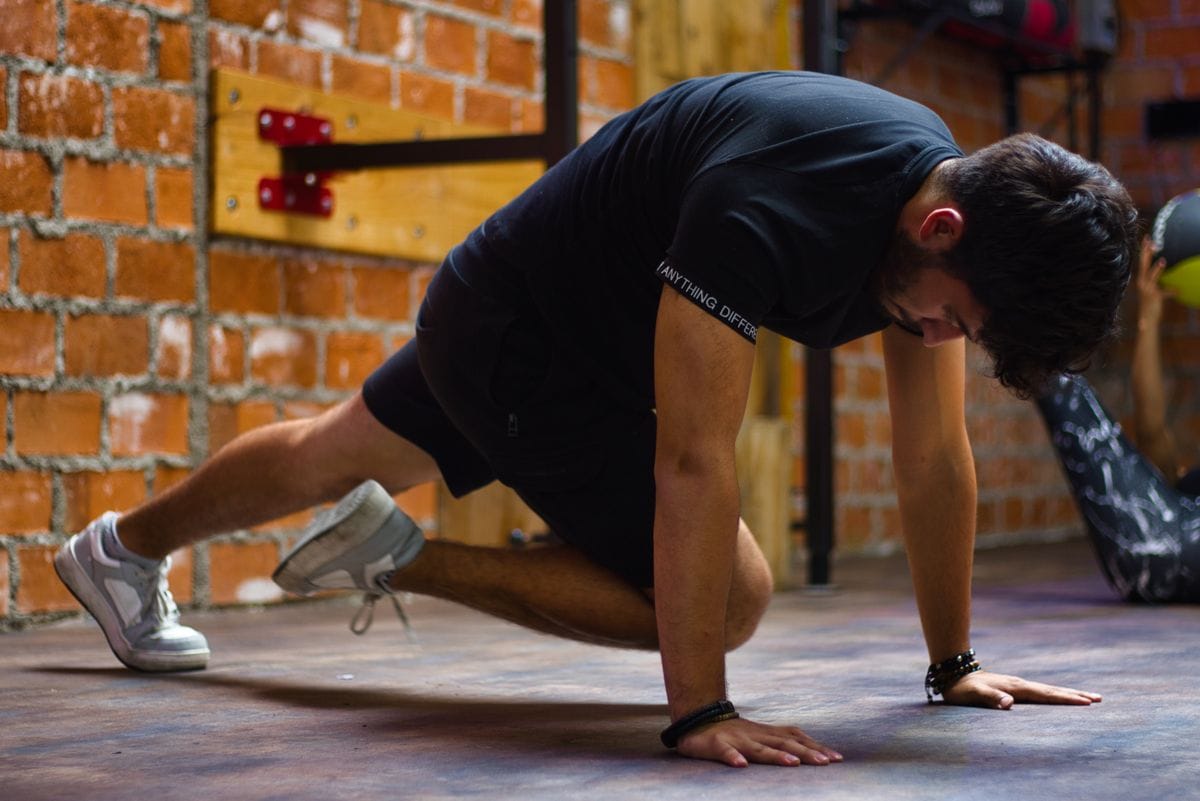
Bear Crawl Execution Standards
This bear crawl exercise progresses through four levels, from a static hover to a controlled crawl in every direction.
- Level 1: The Frame. Set up on all fours — hands under shoulders, knees under hips and bent at 90 degrees, back flat. Lift the knees a few centimeters off the floor and hold; this floating tabletop is the position you will carry through every step.
- Level 2: The Float. Keep the knees hovering just above the floor and the hips level with the shoulders — imagine balancing a glass of water on your lower back. If the hips pop up or sway, the crawl has already broken.
- Level 3: The Step. Move the opposite hand and foot forward simultaneously with absolute control — small steps, quiet landings, hips dead level throughout.
- The Rhythm. Chain steps into a slow, continuous crawl — forward, then backward — breathing steadily. The test is silence: a controlled bear crawl makes almost no sound.
200+ FCS 战斗应用
As the flagship anti-rotation core drill on the move in the 200+ FCS main workout, the bear crawl loads the exact chassis combat runs on: shoulders that push and frame, a trunk that refuses to twist as limbs fire diagonally, and hips that stay level under shifting weight.
It sits in Block B (Structural Strength & Unilateral Overload) as the moving upgrade of the 死虫 — the same opposite-limb, quiet-trunk rule, now carried on four points under load. The contralateral pattern is the engine of a 打空拳训练 too: opposite hand and foot working together is exactly how punches are thrown.
A fighter who leaks in the crawl leaks in the scramble: hips that pop up in a sprawl, shoulders that collapse in the clinch, and a base that wobbles the moment one hand posts.
How to Structure Your Bear Crawl
A complete bear crawl block at Gooart Space follows the 200+ FCS main-workout structure: 3 to 4 rounds of 8–10 meters (or 20–30 seconds), with 45–60 seconds of rest between rounds.
Round 1 crawls forward at a slow, deliberate pace — pause after each step to check the knee hover and level hips. Round 2 adds the backward crawl on the return leg, which doubles the shoulder and core demand. Rounds 3–4 (optional, for advanced athletes) add lateral crawling or slow the tempo further — three seconds per step — for maximum tension.
Keep every meter at technique-first pace: a short, silent crawl beats a long, noisy one. Finish with a 10-second static hover, knees floating, breathing steadily.
Common Mistakes in This Bear Crawl Exercise
- Hips piking toward the ceiling. The crawl turns into a walking downward dog and the core stops working. 解决方法: Drop the hips level with the shoulders and shorten your steps until the line holds.
- Knees resting or dragging on the floor. The float disappears and the exercise becomes a baby crawl. 解决方法: Re-set the hover at a few centimeters — lower is harder and better; touching is a failed rep.
- Hips swaying side to side. Each step rocks the pelvis, leaking rotation the drill is meant to resist. 解决方法: Slow down and take smaller steps — the glass of water on your lower back must not spill.
- Same-side hand and foot moving together. The pattern collapses into an amble and the contralateral wiring never fires. 解决方法: Rehearse in place first — lift opposite hand and foot without moving — then crawl.
- Head dropping or craning up. The neck breaks the plank line at its top link. 解决方法: Keep the head neutral with eyes on the floor slightly ahead of the hands.
- Rushing with momentum. Fast, loud steps replace tension with bounce. 解决方法: Crawl at a three-count cadence and land each hand and foot silently — speed is earned after silence.
安全注意事项
- Use a mat or clean floor: The hands bear repeated load — grip and padding keep the wrists comfortable across rounds.
- Warm up first: Prime the wrists, shoulders, and core before loading the crawl; a light pulse-raiser plus wrist circles is the minimum entry fee.
- Respect the wrists and shoulders: Aching wrists or shrugging shoulders mean the frame is failing — shorten the distance and rebuild from the static hover.
- Scale the position: If the full crawl breaks form, regress to the static bear hover, then to in-place opposite-limb lifts, then to short two-step crawls.
- Stop conditions: Wrist pain, a lower back that sags or cramps, or hips that refuse to stay level mean stop, rest, and shorten the round — a sloppy crawl rehearses the exact leaks it exists to fix.
指导提示: “Keep your knees floating just above the floor and your hips level. Move opposite hand and foot forward simultaneously with absolute control.”
益处
作为涵盖200多个FCS动作的更广泛动作库的一部分,该动作以核心训练为基础 力量训练 在遵循这些原则的同时,针对力量与体能训练阶段的具体需求进行设计。就难度而言,该训练方案最适合那些已经掌握基础技能的运动员。.
从后勤角度来看,无需训练伙伴,因此可以完全独自进行训练;在装备方面,只需极少的、口袋大小的器材即可。.
正是这种低后勤开销与清晰技术标准的结合,使得该训练动作在“Gooart Space 200+ FCS”系统中占据了一席之地,而非昙花一现的新奇动作:随着你整体战斗体能的提升,该动作可以进行持续训练、长期追踪,并安全地逐步提升难度。.
训练计划与进阶
In the 200+ FCS framework, Bear Crawl is programmed inside the main workout block of a session. Program it in the main block of the session, after the warm-up, when you have the most physical and mental capacity to hold strict technical standards under fatigue.
在中级阶段,应优先保证动作的规范性,而非速度、负重或动作幅度——上述执行标准的存在,正是为了确保绝不以牺牲动作质量为代价来追求训练强度。.
随着训练的深入,下一步的自然选择是增加训练量(额外的组数、轮次或次数)、阻力或速度,或是提高动作本身的复杂度,但前提是必须确保每个动作都能达到本页前面所述的标准。 请定期重温“常见错误”和“安全注意事项”部分,因为疲劳通常是导致技术标准首先出现偏差的首要原因。.
常见问题解答
Is Bear Crawl suitable for beginners?
Bear Crawl is classified as intermediate in the 200+ FCS system. In practice, this is best suited to athletes who already have the underlying fundamentals in place, and it is best coached with strict attention to the execution standards above before adding speed, load, or resistance.
What equipment do I need for Bear Crawl?
该训练仅需极少的口袋尺寸装备,且无需训练伙伴,因此完全可以独自进行。请查阅本页面列出的“装备清单”和“准备工作”部分,了解Gooart Space实际使用的具体装备。.
Where does Bear Crawl fit in a training session?
Bear Crawl belongs to the main workout block of the 200+ FCS session structure. Program it in the main block of the session, after the warm-up, when you have the most physical and mental capacity to hold strict technical standards under fatigue.
Anti-rotation Core Drill
Looking for “anti-rotation core drill”? Bear Crawl covers this directly, using the standards and safety notes already outlined on this page.
相关练习
您已经阅读了相关标准——现在就来培训他们吧。预约我们在马六甲工作室的一对一课程,在第一小时内即可针对您所使用的全部7个FCS系统完成基准评估。.
预约您的首次课程