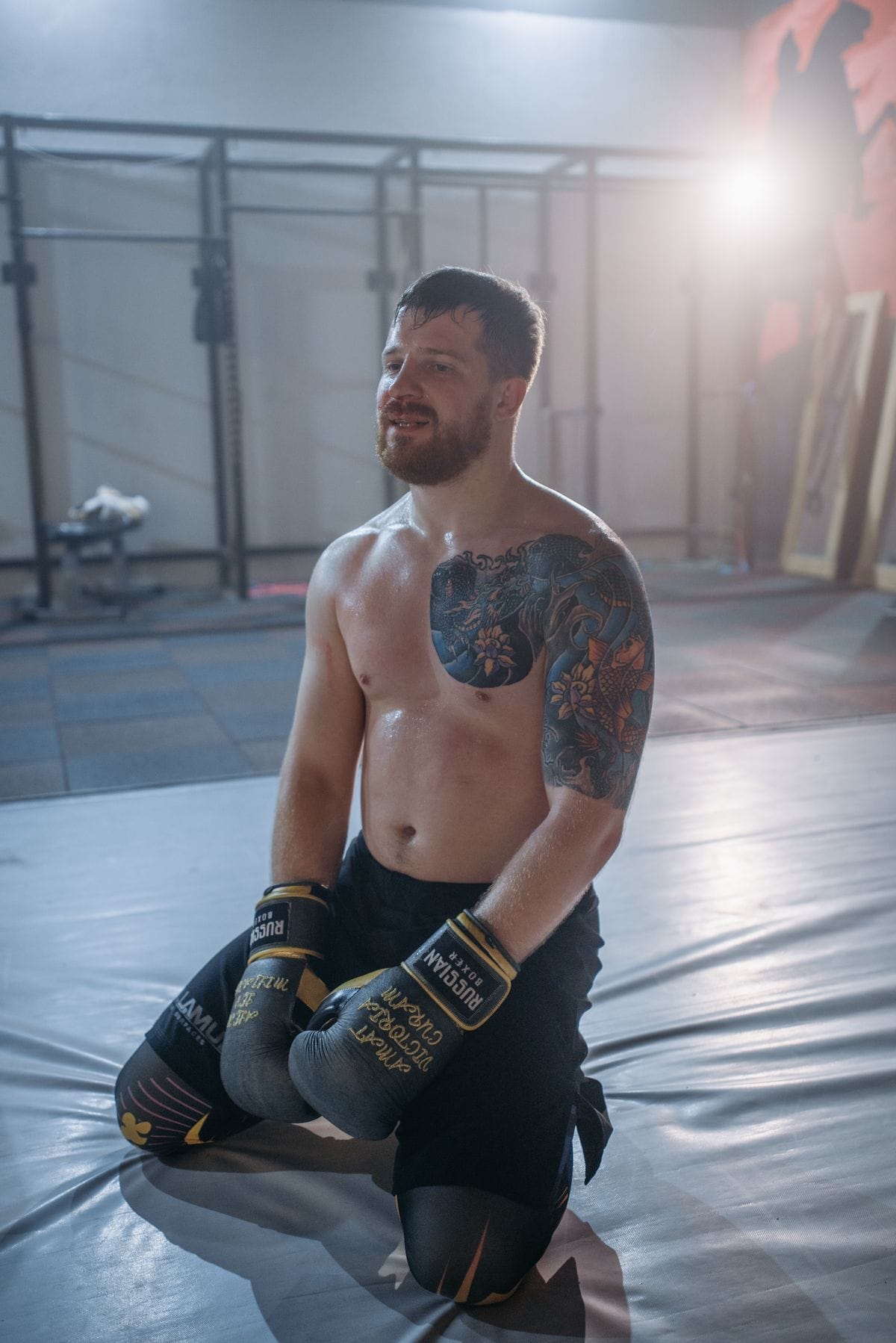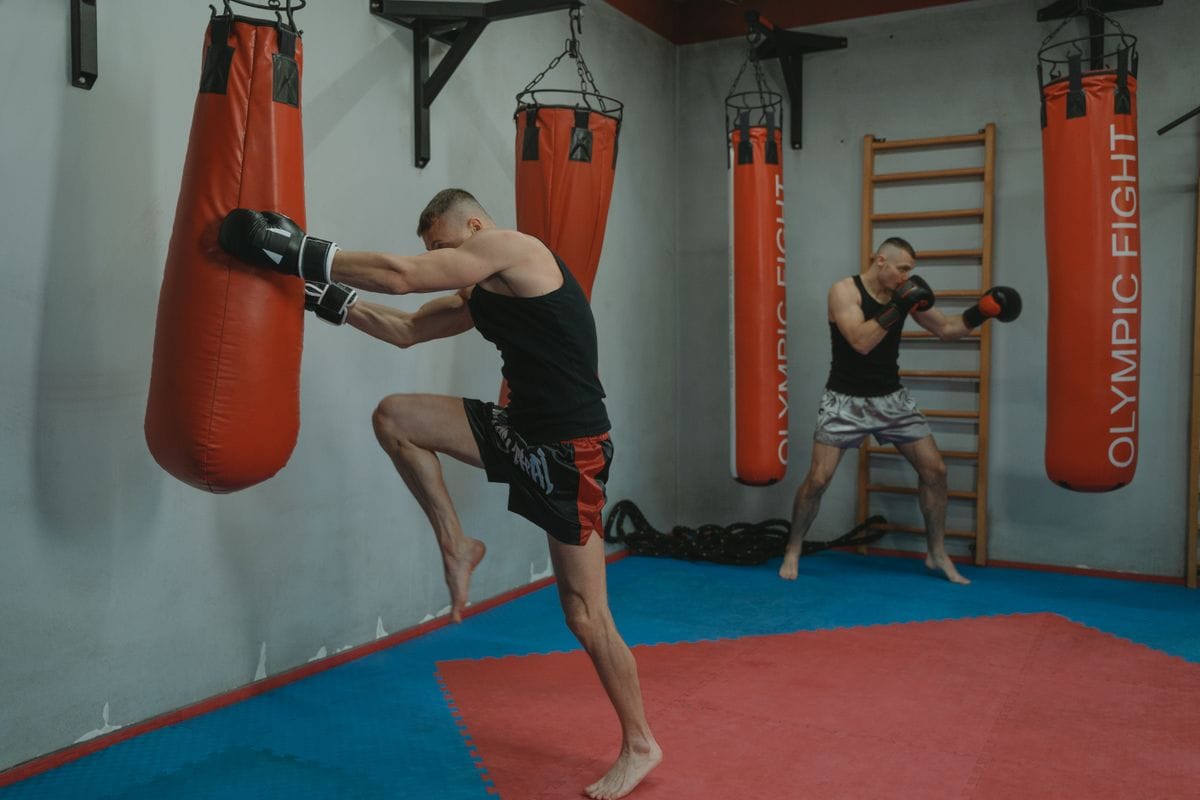

The movie version of a muay thai workout is pad work under fluorescent lights. The real version — the one nak muay in Thailand actually run on — is roadwork, shadowboxing, and rounds of relentless repetition long before anyone holds pads for you. All of which fits in a living room. This guide gives you the coach’s version: what a real session contains, a 5-round home structure, and how to condition like a fighter without a single piece of equipment.
目录

What a Real Muay Thai Workout Contains
泰拳 training is built in rounds, and every round has a job. The classic session skeleton: skipping or footwork to warm up, shadowboxing to groove technique, bag or pad rounds for power, clinch work, then conditioning. At home, shadowboxing carries the technique load — it is how fighters build clean mechanics before power ever enters the picture. If you want the full art-form background first, the Thai boxing guide covers stance, rules, and history.
Muay Thai Workout at Home: The 5-Round Session
Five rounds of 3 minutes, 1 minute rest between rounds. Set a timer and do not negotiate with it:
- Round 1 — Stance and footwork: hands high, weight balanced, step-drag in every direction. Boring is correct; this is the base everything stands on.
- Round 2 — Hands: jab, cross, hook, and combinations. The jab execution page is worth two minutes before this round.
- Round 3 — Teep and knees: push kicks to an imaginary midsection, then straight knees with a strong hip drive.
- Round 4 — Free shadowboxing: combine everything, move between combinations, visualize an opponent who moves back.
- Round 5 — Conditioning: 30 seconds fast shadowboxing or sprawls, 30 seconds easy pace, repeat to the bell.

Kickboxing Workout No Equipment Needed
The same session doubles as a kickboxing workout with no equipment at all — swap the clinch-flavoured knees for round kicks and the structure is identical. Shadowboxing is not a placeholder for “real” training; it is how technique gets installed when there is nobody to hit. Film a round on your phone occasionally — what you feel and what you look like are different sports.
The Conditioning Truth
Fight conditioning is interval conditioning: hard bursts, short recovery, repeat. The 30/30 structure in Round 5 covers it. Two to three sessions per week builds the engine; daily junk volume just builds fatigue. Strength work underneath the rounds matters too — the 功能性训练课程 blueprint pairs cleanly with fight training.
常见错误
- Arm-only shadowboxing. No hip rotation means no power, no matter how fast the hands look.
- Flat feet. Stay on the balls of your feet; heels planted is a statue, not a stance.
- Dropping hands between combinations. The rest position is the guard position.
- Skipping Round 1. Footwork first, always — it is the difference between drilling and flailing.
常见问题
Can you actually learn muay thai at home?
The mechanics — stance, footwork, strikes, combinations — yes, with shadowboxing and honest self-review. Timing and contact need a partner or coach eventually. Home rounds build the base that makes gym time count later.
How long is a proper session?
The 5-round structure above is about 25 minutes. Add a warm-up and you are at 30 — the same as a gym class minus the commute.
Do I need a heavy bag?
Not to start. A bag adds resistance and impact conditioning, but months of productive training exist before it becomes the bottleneck.
How many days per week?
Two to four, with rest or easy movement between hard sessions. Consistency over heroics.
Is this enough cardio?
Rounds plus the 30/30 finisher are real conditioning. Add easy walks or runs on off days if fat loss is also the goal.
Round One Starts Tonight
Clear two metres of floor, set the timer, run the five rounds. Every technique page you need is in the free 我的培训资料库 — the session starts whenever you do.
您已经阅读了相关标准——现在就来培训他们吧。预约我们在马六甲工作室的一对一课程,在第一小时内即可针对您所使用的全部7个FCS系统完成基准评估。.
预约您的首次课程