

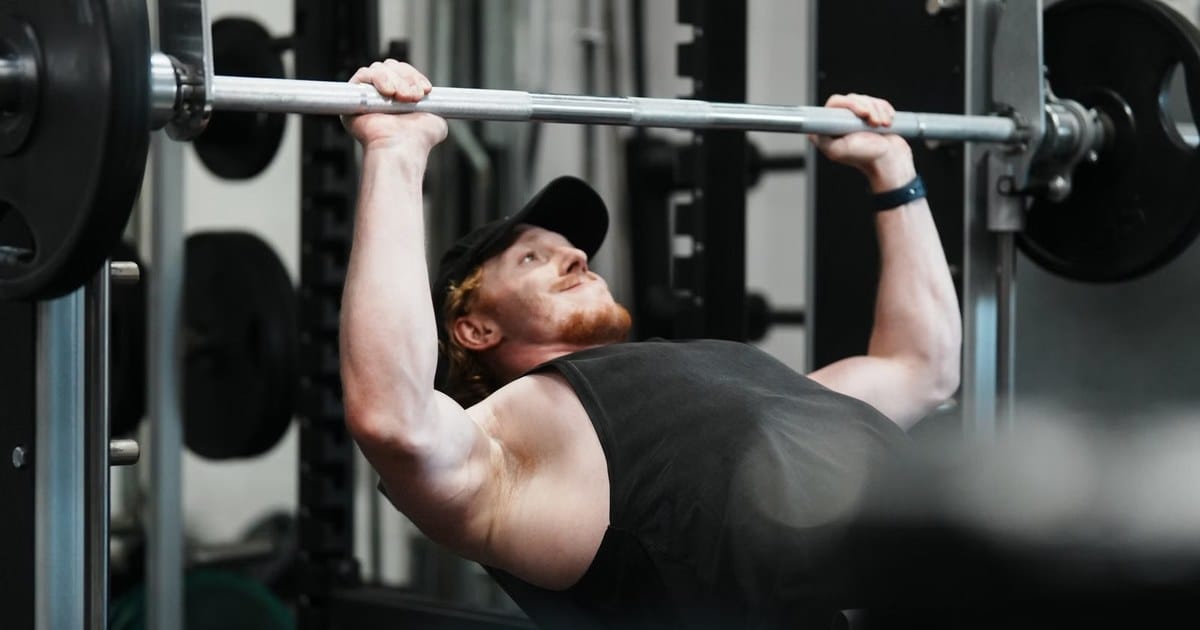
The incline dumbbell press is the upper-chest press most people think they are doing on a flat bench. Two bells, a 30–45° bench, and a path that finishes over the upper chest — not the neck, not the lights.
This guide is the one we wanted before anyone copied a Muscle & Strength thumbnail and wrecked a shoulder: how to do the incline dumbbell press, why dumbbell incline bench press is the same lift with the words shuffled, and an honest bench press vs incline dumbbell press call.
Table of Contents
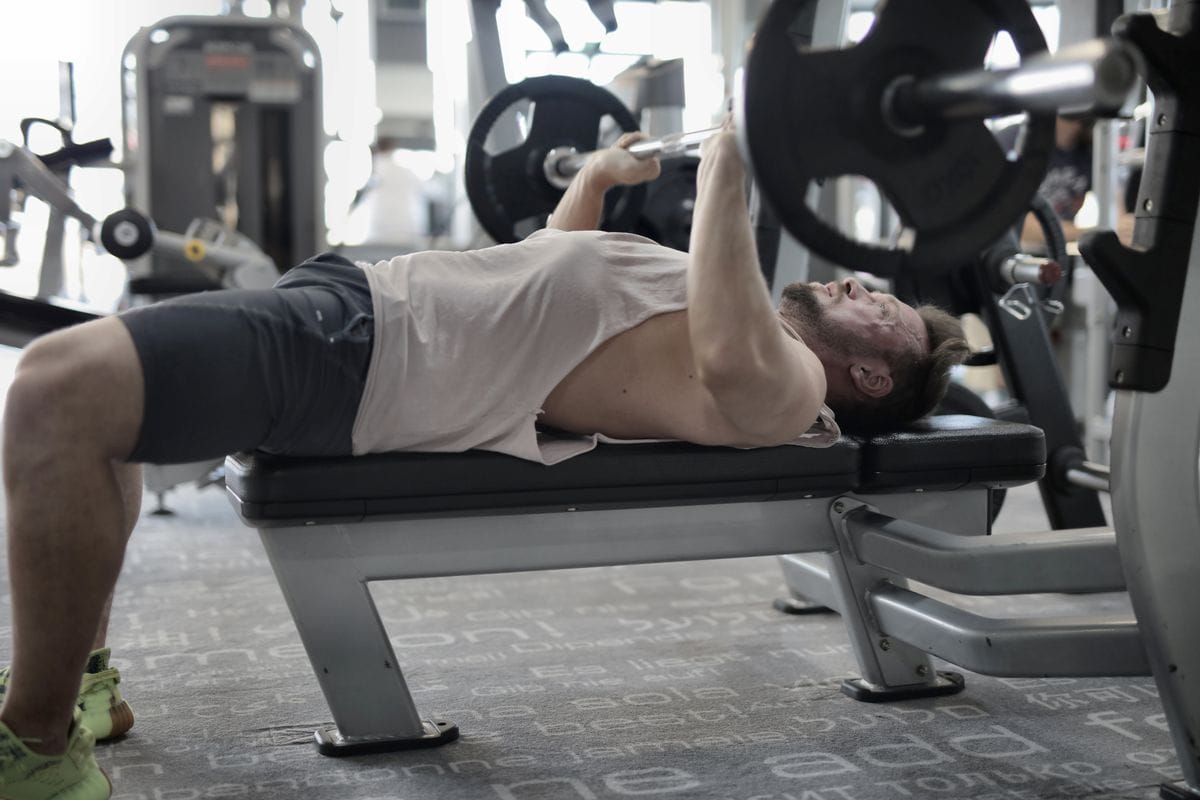
What an Incline Dumbbell Press Actually Is
An incline dumbbell press is a press from an adjustable bench set uphill. You start with the bells over the upper chest, lower them with control, and press back on the same path.
Dumbbell incline bench press is the same movement. Same SERP, same lift, different word order. If a programme writes one and a log writes the other, you are not missing a secret variation.
What it is not:
- A flat bench with the seat kicked up “one notch for comfort.”
- A shoulder press that happens to start on a bench.
- A requirement. Plenty of strong upper bodies are built on push-ups, landmine presses, and a flat dumbbell press.
At Gooart we treat it as upper-push strength for striking and clinch frames — not a bodybuilding isolation trick. If the rest of the session is pads and rounds, this is the lift that keeps the arms from dying when the guard has to stay high.
How to Do the Incline Dumbbell Press
Coach’s cue: pack the shoulder blades, ribs down, bells travel to the upper chest — not the collarbones.
How to do the incline dumbbell press with a 30–45° bench, packed shoulders, and a path that finishes over the upper chest.
Total Time: 8 minutes
Set the bench to 30–45°
u003cpu003eSteeper than 45° becomes a shoulder press. Flatter than 30° is a flat press. Lock the pin before you sit.u003c/pu003e
Plant your feet and pack your back
u003cpu003eWhole foot on the floor. Glutes on the pad. Shoulder blades packed, ribs down. If the lower back hammocks, flatten the bench or drop the load.u003c/pu003e
Get the dumbbells into position
u003cpu003eSit, rest the bells on your thighs, lie back, and kick them to the start. Wrists stacked over elbows. Palms roughly forward.u003c/pu003e
Lower with control to the upper chest
u003cpu003eAbout three seconds down. Elbows about 45° from the torso. Stop when the bells are beside the upper chest — no bounce.u003c/pu003e
Press on the same path
u003cpu003eDrive up and slightly together. Do not let the bells drift toward your face.u003c/pu003e
Lock out without shrugging
u003cpu003eArms long, shoulders down. A shrugged lockout is a trap shrug, not a press.u003c/pu003e
Reset and repeat
u003cpu003eTouch-and-go is fine if the shoulder stays packed. Failed reps dump outward, never over the face.u003c/pu003e
Bench Press vs Incline Dumbbell Press
Bench press vs incline dumbbell press is not a religion question. It is a job question.
| Lift | Best job | Cost |
|---|---|---|
| Flat barbell bench | Heaviest absolute load | Needs a rack, a spot, and a shoulder that likes a fixed bar path |
| Flat dumbbell press | Left-right honesty, friendlier wrists | Harder to get into position when the bells get heavy |
| Incline dumbbell press | Upper chest + front delts, each arm accountable | Easier to turn into a sloppy shoulder press if the bench is too steep |
Pick the incline dumbbell press when you want each arm to finish its own rep, when a barbell path bothers the shoulder, or when the session already has a lot of flat pressing. Keep a flat press in the week if you care about raw pushing strength.
Do not do both as “chest day max-outs.” One hard press, then move.
Angle, Muscles, Sets
- Angle: 30–45°. Write the number on the bench pin if you share the gym.
- Muscles: upper chest, front delts, triceps. The closer you get to 45°, the more the front delt pays.
- Sets: 3–4 working sets of 6–10. Leave 1–2 reps in the tank. Failed incline bells next to your face is a bad story.
- When: main block, after the warm-up, while you can still pack the shoulders.
If you train striking the same day, keep this before the pads, or keep the load honest. A wrecked shoulder press does not make the jab sharper.
Common Mistakes
- Bench at 60°. That is a seated shoulder press. Set it back.
- Flaring the elbows to 90°. The front of the shoulder takes the shear. Tuck to about 45°.
- Bouncing off the chest. You borrowed rebound and sold the shoulder the bill.
- Shrugging the lockout. Pack first, then press.
- Feet surfing. If the feet move, the load is too heavy or the bench is too upright.
- One side drifting. The whole point of dumbbells is that the weak side cannot hide. Film a set.
Safety Notes
- Start lighter than your flat-dumbbell working weight. The incline shortens the strong part of the press.
- If a sharp front-shoulder pinch shows up in the bottom, raise the bells’ start position or flatten the bench 5°. Pain is not a cue.
- Dump the bells outward if a rep dies. Do not try to save a failed lockout over your face.
- Clear the floor. A rolling bell is how people collect a roommate’s ankle.
For general strength-training context, see strength training. For the rest of the push-and-fuel stack, see The Fighter’s Supplement Guide.
FAQ
Is the incline dumbbell press the same as a dumbbell incline bench press?
u003cpu003eYes. Same lift. Dumbbell incline bench press is just the word order flipped.u003c/pu003e
What is the best angle for an incline dumbbell press?
u003cpu003e30–45 degrees. Steeper is a shoulder press. Flatter is a flat press.u003c/pu003e
Bench press vs incline dumbbell press — which should I do?
u003cpu003eFlat bench if you want the heaviest press. Incline dumbbells if you want each arm honest and a little more upper chest and front delt. Most people do not need both as max-effort work in the same session.u003c/pu003e
What muscles does the incline dumbbell press work?
u003cpu003eUpper chest, front delts, and triceps. The front-delt share goes up as the bench gets steeper.u003c/pu003e
How many sets and reps?
u003cpu003e3–4 sets of 6–10, with one or two reps in reserve. Stop if the shoulder shrugs or the path drifts to the face.u003c/pu003e
Is it safe if my shoulder is cranky?
u003cpu003eMaybe. Flatten the angle, tuck the elbows, and drop the load. If the pinch stays, skip it and get the shoulder checked. This page is not a diagnosis.u003c/pu003e
Do I need this for combat fitness?
u003cpu003eYou need some upper-push strength. This is one clean way to get it with a pair of bells and a bench. It will not replace rounds, pads, or sleep.u003c/pu003e
The Bottom Line
An incline dumbbell press is a 30–45° press with two bells and no place for a weak side to hide. Dumbbell incline bench press is the same lift. Bench press vs incline dumbbell press is a job split: bar for load, incline bells for honest arms and a higher contact point.
Then put the lift in its place: build the session in our combat fitness classes, keep protein numbers honest with the Protein Calculator, and if you want another dumbbell standard, read the Dumbbell Thruster Guide.
You've read the standards — now train them. Book a 1-on-1 session at our Melaka studio and get your baseline mapped across all 7 FCS systems in your first hour.
Book Your First Session