
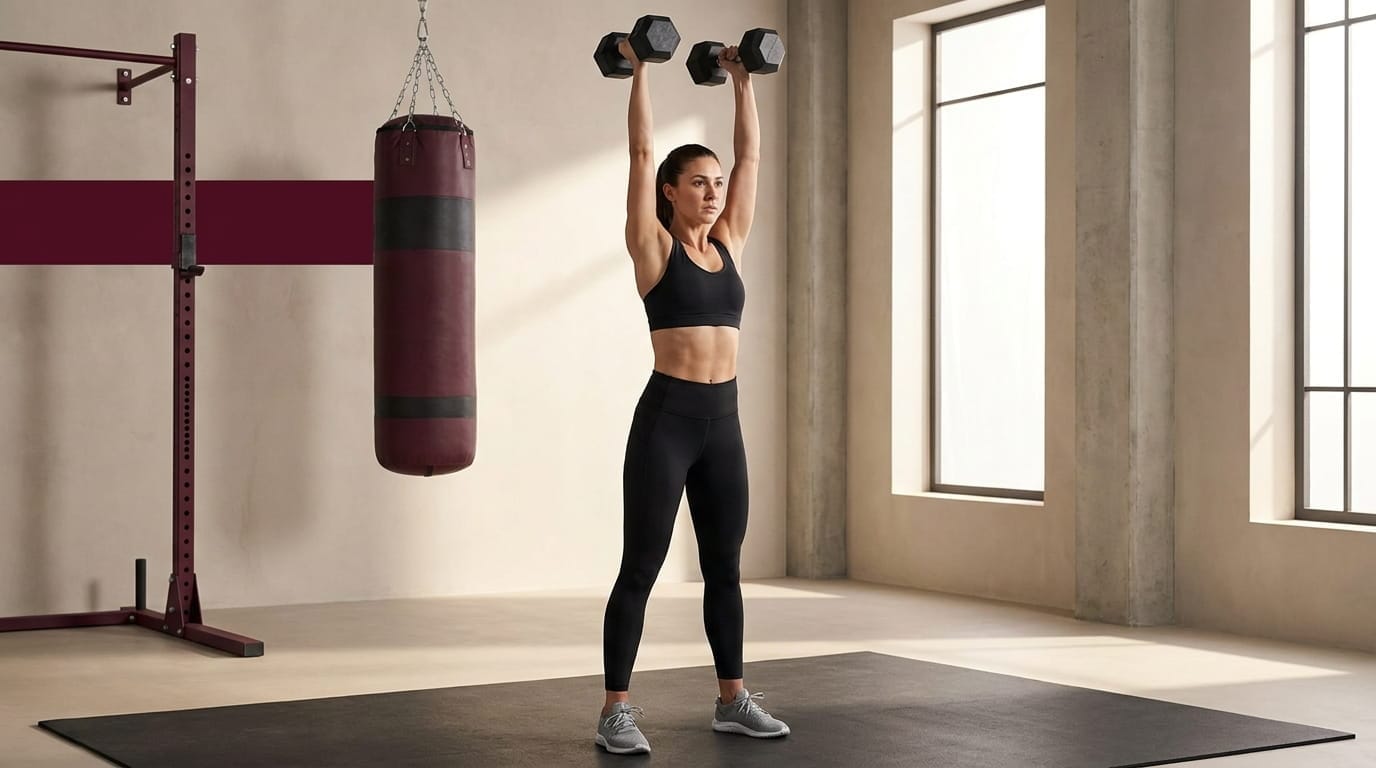
Thruster dumbbell adalah gabungan squat hadapan dan press atas kepala menjadi satu gerakan letupan — dan salah satu senaman seluruh badan paling cekap yang boleh anda lakukan dengan sepasang dumbbell. Jika dilakukan dengan betul, ia membina kaki, bahu, paru-paru, dan kestabilan teras yang tahan lasak di bawah tekanan fizikal sebenar. Jika dilakukan dengan buruk, ia menjadi jongkok perlahan diikuti oleh tolakan yang dipaksa sehingga membebani bahagian bawah belakang anda.
Panduan ini merangkumi cara melakukan dumbbell thruster dengan teknik yang betul, manfaat yang berbaloi untuk dilatih, lima kesilapan yang merosakkannya, dan cara mendapatkan setiap ulangan diperiksa secara masa nyata.
Senarai Kandungan
Apakah Dumbbell Thruster?
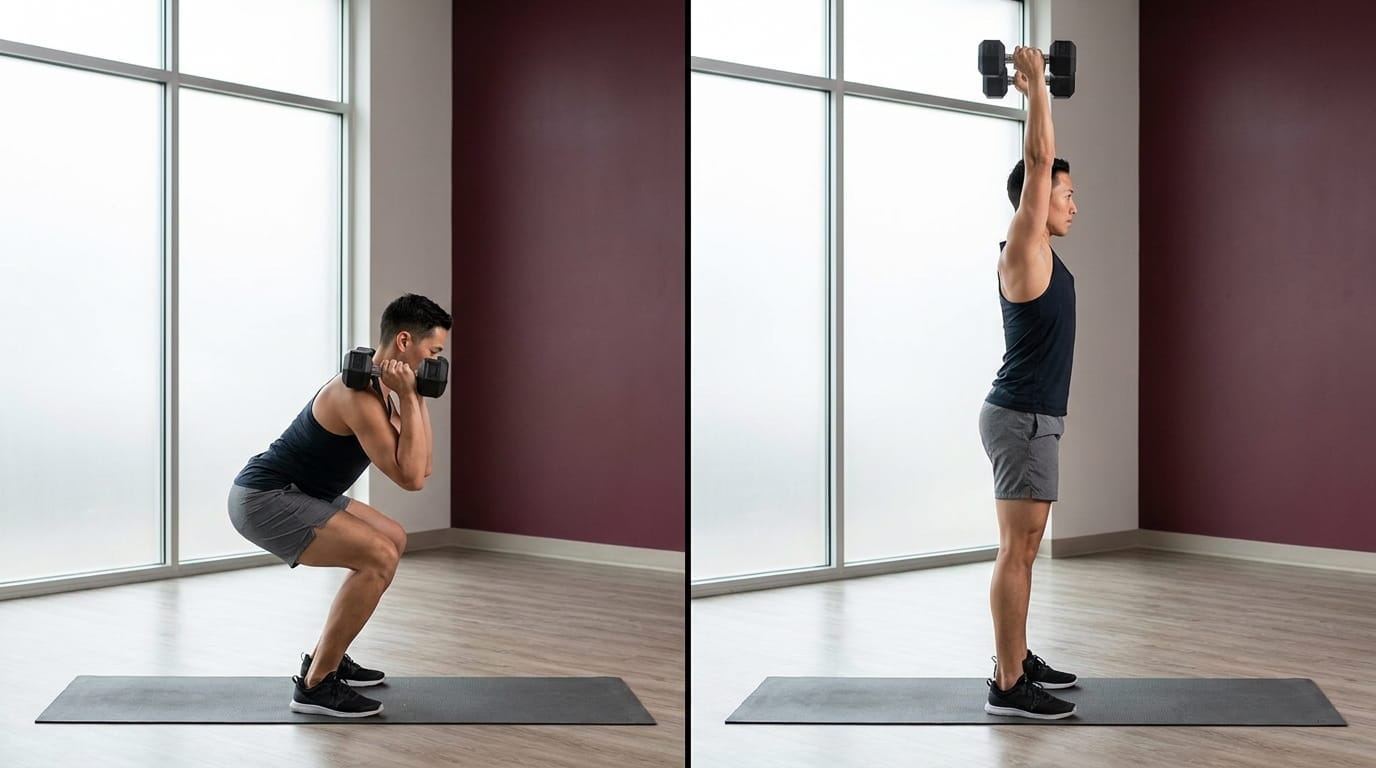
Thruster dumbbell adalah pergerakan komposit: anda menurunkan badan ke posisi squat hadapan dengan dumbbell disandarkan di bahu, kemudian menolak ke atas dengan meletup dan memukul berat di atas kepala dalam satu gerakan berterusan. Tiada hentian antara squat dan tekan — momentum daripada kaki anda yang membawa dumbbell ke atas.
Keterusan itulah intipatinya. Dalam Sistem Pertempuran Fungsional 200+ (FCS), Thruster diletakkan dalam blok kekuatan struktur kerana ia melatih urutan kinetik tepat yang digunakan dalam pertahanan takedown dan serangan dalam clinch: perubahan aras, lanjutan pinggul yang ganas, dan dorongan ke atas menembusi rintangan. Sedikit pergerakan yang mengajar pemindahan tenaga dari bahagian bawah ke atas badan secara langsung sebegini.
Teknik Thruster Dumbbell: Piawaian Langkah demi Langkah
Petunjuk Jurulatih: “Tetap menegakkan otot teras anda. Ini bukan pergerakan terpisah. Dorong dengan meletup melalui tumit anda dan alihkan tenaga kinetik terus ke atas untuk memukul dumbel di atas kepala.”
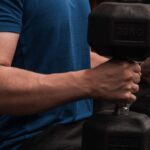
- Pemasangan: Berdiri dengan kaki selebar bahu. Letakkan dumbel di bahu anda dengan siku sedikit terangkat — dumbel terletak di bahu anda, bukan di tangan anda.
- Penurunan: Kencangkan otot teras anda, jaga tulang belakang dalam kedudukan neutral, dan jongkok sehingga peha anda sekurang-kurangnya selari dengan lantai.
- Pemanduan: Dorong dengan kuat melalui tumit anda. Apabila pinggul dan lutut anda sepenuhnya lurus, gunakan momentum ke atas itu untuk menolak dumbel di atas kepala dalam satu gerakan agresif dan lancar.
- Perangkapnya: Turunkan dumbel kembali ke bahu anda dan serap beratnya dengan mengalir terus ke squat seterusnya. Tiada hentakan, tiada hentian.
Tonton video demonstrasi di halaman ini terlebih dahulu, kemudian padankan setiap ulangan dengan piawaian tersebut.
Manfaat Thruster Dumbbell
- Tenaga seluruh badan dalam satu gerakan — Kaki, punggung, teras, bahu dan trisep semuanya berfungsi melalui satu julat pergerakan panjang. Hanya beberapa senaman memberikan kesan latihan sebanyak ini setiap minit.
- Pemindahan tenaga dari bahagian bawah badan ke bahagian atas badan — Thruster mengajar daya untuk bergerak dari tanah melalui pinggul anda ke bahagian atas badan anda. Dalam istilah serangan dan bergelut, inilah perbezaan antara tumbukan lengan dan kuasa sebenar.
- Ketahanan bahu di bawah keletihan — Menekan ketika kaki dan paru-paru anda terbakar membina ketahanan bahu yang menentukan pusingan akhir dan pertukaran clinch yang panjang.
- Kestabilan teras di bawah beban dinamik — Menahan beban bergerak melalui perubahan aras adalah jauh lebih hampir dengan keperluan fizikal sebenar berbanding sebarang pegangan statik.
- Kondisi serius — Jisim otot yang besar ditambah laluan bar yang panjang sama dengan kos metabolik yang tinggi. Beberapa set yang jujur akan memberitahu anda lebih banyak tentang enjin anda berbanding kebanyakan mesin kardio.
- Logistik minimum — Satu pasang dumbel, tiada rakan, tiada rak. Ia boleh dibawa ke mana-mana gim atau susunan di rumah, itulah sebabnya ia mendapat tempat kekal dalam perpustakaan FCS yang mempunyai lebih daripada 200 item.
5 Kesilapan Biasa Thruster Dumbbell (dan Cara Memperbaikinya)
- Menekan hanya dengan lengan. Jika pendorong kaki terhenti sebelum tekanan bermula, anda sedang melakukan squat hadapan dan tekan ketat — perlahan-lahan. Baiki: Bayangkan “melompat dengan beban”; dumbel sepatutnya terasa hampir tiada berat apabila terangkat dari bahu anda.
- Siku jatuh di rak. Loceng-loceng itu terapung ke hadapan, bahagian atas belakang anda melengkung, dan penurunan itu runtuh. Baiki: Tinggikan siku sedikit dan biarkan dumbel terletak di bahu anda.
- tumit naik semasa pemanduan. Tenaga bocor keluar dari rantaian kinetik dan lutut anda menyerap bebanan. Baiki: Tanamkan seluruh kaki, dorong melalui tumit sehingga lanjutan pinggul sepenuhnya.
- Melengkungkan bahagian bawah belakang pada kedudukan kunci. Rusuk yang melebar memindahkan beban ke tulang belakang lumbar anda. Baiki: Berdiri teguh, rusuk diturunkan, otot punggung diketatkan sewaktu loceng berlalu di atas kepala.
- Kedalaman pemotongan apabila penat. Ulangan separuh kedalaman membengkakkan angka anda dan memecahkan piawaian. Baiki: Buat paha selari setiap ulangan — kurangkan beban sebelum mengurangkan kedalaman.
Keselamatan & Pemilihan Beban
- Mula lebih ringan daripada berat kerja press ketat anda — keletihan bertambah dengan pantas dalam gerakan ini, dan bentuk tubuh merosot sebelum anda merasakannya.
- Jika anda tidak dapat mengunci overhead tanpa membengkokkan bahagian bawah belakang anda, kembali ke thruster satu dumbel atau kurangkan beban sehingga mobiliti anda membolehkan kunci lengan yang sempurna.
- Pastikan pergelangan tangan berada dalam kedudukan neutral dan tersusun di bawah dumbel — jangan sekali-kali dibengkokkan ke belakang.
- Batalkan set tersebut dengan segera jika bahagian bawah belakang anda melengkung ke hadapan semasa jongkong atau melengkung ke belakang semasa kunci.
- Bebaskan ruang anda: ruang atas sepenuhnya bebas dan ruang yang mencukupi untuk menjatuhkan dumbel dengan selamat jika ulangan gagal.
Bagaimana untuk memprogramkan Dumbbell Thrusters
Programkan pemacu dalam blok utama daripada sesi anda, selepas pemanasan, ketika anda masih mempunyai keupayaan fizikal dan mental untuk mengekalkan piawaian ketat walaupun penat. Titik permulaan yang kukuh ialah 3–4 set dengan 6–10 ulangan dan pemulihan penuh antara set.
Pada tahap pertengahan, teknik yang bersih mengatasi kelajuan, beban, dan jumlah ulangan. Maju dengan menambah ulangan, beban, atau kerumitan hanya apabila setiap ulangan memenuhi piawaian pelaksanaan di atas — dan semak semula senarai kesilapan secara berkala, kerana keletihan adalah faktor pertama yang merosakkan teknik.
Periksa Setiap Rep — Penglihatan AI
Bahagian paling sukar tentang dumbbell thruster ialah mengetahui sama ada kedalaman dan kunci anda benar-benar bersih — terutamanya apabila berlatih bersendirian di rumah. Itulah yang dilakukan oleh sistem Gooart Space AI Vision: ia memerhati ulangan anda melalui kamera telefon atau komputer riba dan menjejaki kedalaman jongkok, laluan pendorongan, dan kunci kedudukan atas kepala secara masa nyata, dengan meter kedalaman khusus yang direka khusus untuk pergerakan ini.
Perpustakaan latihan awam boleh dicuba secara percuma — tiada pendaftaran diperlukan. Dumbbell Thruster adalah sebahagian daripada perpustakaan Premium, dibuka dengan keahlian bersama lebih 150 pergerakan tambahan dan rutin berstruktur. Latihan dalam talian kini disiarkan secara langsung; kelas bersemuka di Melaka akan datang tidak lama lagi.
👉 Cuba latihan Penglihatan AI percuma · Terokai perpustakaan senaman
Soalan Lazim
Adakah dumbbell thruster sesuai untuk pemula?
Ia diklasifikasikan sebagai tahap pertengahan dalam sistem FCS 200+. Pemula harus terlebih dahulu menguasai squat badan kosong dan overhead press ketat secara berasingan — kemudian mulakan dengan satu dumbel ringan sebelum beralih kepada pergerakan penuh.
Berat berapa yang patut saya mulakan?
Lebih ringan daripada berat kerja press ketat anda. Jika anda tidak dapat menekan beban di atas kepala dengan ketat untuk beberapa ulangan yang bersih, ia terlalu berat untuk thruster.
Thruster dumbbell vs thruster barbel — yang mana lebih baik?
Dumbbell lebih mesra pada pergelangan tangan dan bahu, membolehkan laluan tekanan yang lebih semula jadi, dan mendedahkan ketidakseimbangan kiri-kanan. Barbell membolehkan beban mutlak yang lebih berat. Untuk latihan di rumah dan pengondisian mesra sendi, dumbbell menang.
Mengapa thruster terasa jauh lebih sukar daripada senaman lain?
Kerana mereka membebankan jumlah jisim otot yang besar melalui salah satu laluan pergerakan terpanjang dalam latihan — jongkong paras lantai hingga lanjutan sepenuhnya di atas kepala. Penglibatan otot yang tinggi ditambah jarak pergerakan yang panjang menghasilkan permintaan oksigen yang tinggi.
Latihan Berkaitan
- Wall Sit — ketahanan isometrik kaki yang menyokong asas jongkong anda
- Kelas kecergasan tempur & kickboxing di Melaka — Latih keseluruhan sistem FCS melebihi 200 dengan jurulatih
Anda telah membaca piawaian — kini latih mereka. Tempah sesi satu-satu di studio kami di Melaka dan kenal pasti asas anda merentasi semua 7 sistem FCS dalam jam pertama anda.
Tempah sesi pertama anda